Utilisez moins de texte sur mobile !EXACTEMENT CE QU'IL VOUS FAUTTOUT EST PERSONNALISABLEUtilisez moins de texte sur mobile !RESSENTEZ LE LUXE
Utilisez moins de texte sur mobile !EXACTEMENT CE QU'IL VOUS FAUTTOUT EST PERSONNALISABLEUtilisez moins de texte sur mobile !RESSENTEZ LE LUXE
Utilisez moins de texte sur mobile !EXACTEMENT CE QU'IL VOUS FAUTTOUT EST PERSONNALISABLEUtilisez moins de texte sur mobile !RESSENTEZ LE LUXE
Utilisez moins de texte sur mobile !EXACTEMENT CE QU'IL VOUS FAUTTOUT EST PERSONNALISABLEUtilisez moins de texte sur mobile !RESSENTEZ LE LUXE
Utilisez moins de texte sur mobile !EXACTEMENT CE QU'IL VOUS FAUTTOUT EST PERSONNALISABLEUtilisez moins de texte sur mobile !RESSENTEZ LE LUXE
Utilisez moins de texte sur mobile !EXACTEMENT CE QU'IL VOUS FAUTTOUT EST PERSONNALISABLEUtilisez moins de texte sur mobile !RESSENTEZ LE LUXE
Utilisez moins de texte sur mobile !EXACTEMENT CE QU'IL VOUS FAUTTOUT EST PERSONNALISABLEUtilisez moins de texte sur mobile !RESSENTEZ LE LUXE
Utilisez moins de texte sur mobile !EXACTEMENT CE QU'IL VOUS FAUTTOUT EST PERSONNALISABLEUtilisez moins de texte sur mobile !RESSENTEZ LE LUXE
Utilisez moins de texte sur mobile !EXACTEMENT CE QU'IL VOUS FAUTTOUT EST PERSONNALISABLEUtilisez moins de texte sur mobile !RESSENTEZ LE LUXE
Utilisez moins de texte sur mobile !EXACTEMENT CE QU'IL VOUS FAUTTOUT EST PERSONNALISABLEUtilisez moins de texte sur mobile !RESSENTEZ LE LUXE
Utilisez moins de texte sur mobile !EXACTEMENT CE QU'IL VOUS FAUTTOUT EST PERSONNALISABLEUtilisez moins de texte sur mobile !RESSENTEZ LE LUXE
CONTACTEZ-NOUS POUR OBTENIR UN DEVIS SELON VOS BESOINSEXACTEMENT CE QU'IL VOUS FAUTTOUT EST PERSONNALISABLECONTACTEZ-NOUS ET OBTENEZ VOTRE DEVISRESSENTEZ LE LUXE
CONTACTEZ-NOUS POUR OBTENIR UN DEVIS SELON VOS BESOINSEXACTEMENT CE QU'IL VOUS FAUTTOUT EST PERSONNALISABLECONTACTEZ-NOUS ET OBTENEZ VOTRE DEVISRESSENTEZ LE LUXE
CONTACTEZ-NOUS POUR OBTENIR UN DEVIS SELON VOS BESOINSEXACTEMENT CE QU'IL VOUS FAUTTOUT EST PERSONNALISABLECONTACTEZ-NOUS ET OBTENEZ VOTRE DEVISRESSENTEZ LE LUXE
CONTACTEZ-NOUS POUR OBTENIR UN DEVIS SELON VOS BESOINSEXACTEMENT CE QU'IL VOUS FAUTTOUT EST PERSONNALISABLECONTACTEZ-NOUS ET OBTENEZ VOTRE DEVISRESSENTEZ LE LUXE
CONTACTEZ-NOUS POUR OBTENIR UN DEVIS SELON VOS BESOINSEXACTEMENT CE QU'IL VOUS FAUTTOUT EST PERSONNALISABLECONTACTEZ-NOUS ET OBTENEZ VOTRE DEVISRESSENTEZ LE LUXE
CONTACTEZ-NOUS POUR OBTENIR UN DEVIS SELON VOS BESOINSEXACTEMENT CE QU'IL VOUS FAUTTOUT EST PERSONNALISABLECONTACTEZ-NOUS ET OBTENEZ VOTRE DEVISRESSENTEZ LE LUXE
CONTACTEZ-NOUS POUR OBTENIR UN DEVIS SELON VOS BESOINSEXACTEMENT CE QU'IL VOUS FAUTTOUT EST PERSONNALISABLECONTACTEZ-NOUS ET OBTENEZ VOTRE DEVISRESSENTEZ LE LUXE
CONTACTEZ-NOUS POUR OBTENIR UN DEVIS SELON VOS BESOINSEXACTEMENT CE QU'IL VOUS FAUTTOUT EST PERSONNALISABLECONTACTEZ-NOUS ET OBTENEZ VOTRE DEVISRESSENTEZ LE LUXE
CONTACTEZ-NOUS POUR OBTENIR UN DEVIS SELON VOS BESOINSEXACTEMENT CE QU'IL VOUS FAUTTOUT EST PERSONNALISABLECONTACTEZ-NOUS ET OBTENEZ VOTRE DEVISRESSENTEZ LE LUXE
CONTACTEZ-NOUS POUR OBTENIR UN DEVIS SELON VOS BESOINSEXACTEMENT CE QU'IL VOUS FAUTTOUT EST PERSONNALISABLECONTACTEZ-NOUS ET OBTENEZ VOTRE DEVISRESSENTEZ LE LUXE
CONTACTEZ-NOUS POUR OBTENIR UN DEVIS SELON VOS BESOINSEXACTEMENT CE QU'IL VOUS FAUTTOUT EST PERSONNALISABLECONTACTEZ-NOUS ET OBTENEZ VOTRE DEVISRESSENTEZ LE LUXE
Sherwood Lakes Princess Anne Rd Virginia Beach, VA 23456
Lun-Ven : 8h-17h Sam : 8h-19h Dim : 8h-16h
Nouveau client?
Créez un compte afin de profiter du suivi et de l'historique de commandes ainsi que de formulaires préremplis lors du paiement de commandes précédentes.
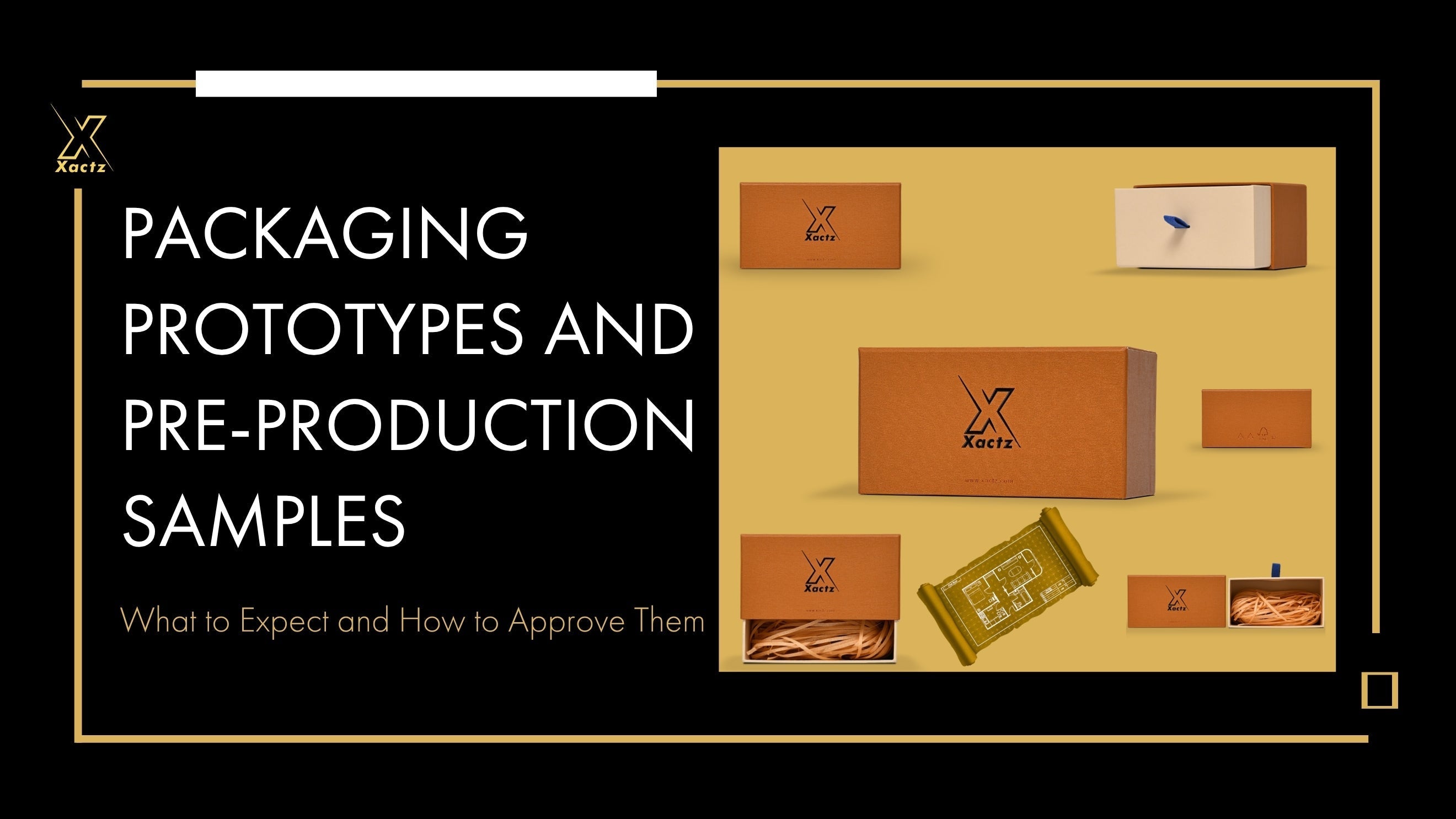
Why the Sampling Stage Is the Most Important Stage of Packaging Development
Every packaging project goes through three commercial moments: the brief, the sample, and the production run. Brand owners spend most of their attention on the brief, the creative direction, the material specification, the cost negotiation. They focus again at production, the volume, the delivery date, the freight arrangement.
In between sits the sampling stage. And the sampling stage is where deals are won, where production failures are prevented, and where confidence is built between brand and manufacturer.
Most packaging problems do not happen in production. They happen at sampling, and they go undetected because the brand owner did not know what to look for, did not document comments properly, or approved a sample that was not actually approval-ready. Once the production run starts, the cost of a sampling error multiplies. A 5mm dimensional drift on a single sample is a free fix. The same drift across 10,000 boxes is a rejected production run, a missed launch deadline, and a six-figure commercial impact.
This guide walks you through the full sampling process, every sample type, every inspection checkpoint, every approval decision, and every documentation requirement. Whether you are approving your first packaging sample or your hundredth, the principles in this guide are the standard that the most disciplined packaging buyers follow.
The Three Types of Packaging Sample, and What Each One Tells You
Not all packaging samples are the same. Each type exists to validate a different aspect of the specification, and brand owners who treat all samples as interchangeable end up approving the wrong things at the wrong stages.
The Three Sample Types
Sample Type
Purpose
Production Method
Approves
White Mock-Up
Structural validation, dimensions, fit, closure
Hand-made or CNC-cut from approved materials, no print
Structure, dimensions, material weight, construction
Digital Print Proof
Artwork verification, colour, typography, layout
Digital print on approved substrate
Print artwork, copy, layout, image positioning
Pre-Production Sample (PPS)
Full production validation, everything
Produced on production tooling with final materials and finishes
Final specification, structure, materials, print, finishing, assembly
Each sample serves a specific purpose at a specific stage. A white mock-up cannot validate colour accuracy. A digital print proof cannot validate structural performance. Only the pre-production sample, produced using the same materials, the same tooling, and the same processes as the full production run, validates the complete specification.
White Mock-Up Sample, Structural Validation
The white mock-up is the first physical sample produced in the development process. It is produced from the approved greyboard and wrap paper specification, without printed artwork, and its purpose is to validate the structural decisions made in the brief before any artwork or finishing investment is committed.
What the White Mock-Up Validates
Internal and external dimensions does the product fit correctly with the specified clearance?
Box style and construction does the box open, close, and behave as the brief specified?
Greyboard weight does the box feel substantial and rigid in the hand?
Closure mechanism does the magnetic closure align correctly with the specified pull force?
Insert fit does the insert hold the product securely at the correct orientation?
Hinge performance does the lid hinge open cleanly without stress on the wrap paper?
When to Request a White Mock-Up
A white mock-up is essential for any custom packaging brief where the structural specification is new or significantly modified, a new box style, new dimensions, a new closure mechanism, or a new insert construction. For repeat orders of an approved specification, a white mock-up is not required, the approved golden sample is the structural reference.
What a White Mock-Up Does Not Validate
A white mock-up does not validate colour, print accuracy, finishing quality, or final material aesthetics. Brand owners who try to evaluate brand impact from a white mock-up, "the box looks plain, I do not love it", are evaluating the wrong stage. The white mock-up exists to confirm structure. Colour, print, and finishing are validated at the digital proof and pre-production sample stages.
Digital Print Proof, Artwork Verification
The digital print proof validates the artwork, the colour, the typography, the layout, the image positioning, before the cost and time of producing a full pre-production sample is committed.
What the Digital Print Proof Validates
Pantone colour rendering does the printed colour match the specified Pantone reference under standardised D65 lighting?
Typography legibility is all text legible at the specified size and contrast?
Image positioning are all images, logos, and brand elements positioned according to the design file?
Bleed and trim accuracy does the artwork extend to the trim edge without white lines or content cropping?
Copy accuracy is every word, every claim, every legal mark, and every regulatory text correct?
Digital Proof vs Press Proof
A digital proof is produced on a calibrated digital printer using the approved substrate. It validates the artwork content and approximate colour rendering, but it cannot perfectly replicate offset or screen-printed colour. For high-precision colour applications, particularly Pantone matches on uncoated stocks, metallic inks, or specialty finishes, a press proof produced on the actual production press is the more accurate reference.
Colour Approval Discipline
Colour rendering varies significantly across paper stocks, lamination films, and lighting conditions. A Pantone reference that looks correct under office fluorescent lighting may shift visibly under daylight or warm retail lighting. The discipline of professional packaging colour approval is:
Always review under standardised D65 daylight not office, retail, or natural window lighting
Compare against a physical Pantone reference book not a digital colour swatch on screen
Approve in writing with a colour delta tolerance typically Delta E ≤ 2.0 for premium applications
Do not approve colour from a photograph or scan the rendering chain introduces inaccuracy at every stage
Pre-Production Sample (PPS), The Final Approval Sample
The pre-production sample is the most important sample in the entire packaging development process. It is the physical representation of every decision made in the brief, produced using the final production tooling, the final materials, and the final finishing processes, and its approval is the gate that opens full production.
What the Pre-Production Sample Validates
The pre-production sample validates every element of the packaging specification simultaneously:
Structural performance dimensions, construction, closure, hinge
Material quality greyboard rigidity, wrap paper accuracy, interior lining
Assembly quality wrap paper application, corner construction, interior fit
Brand consistency logo placement, colour accuracy, finish execution
Why the PPS Approval Is Non-Negotiable
At enterprise scale, no qualified procurement team approves a packaging production run without a pre-production sample. The PPS is the contract, the agreed-upon standard that the production run is measured against. Quality issues identified after production are evaluated by comparison to the approved PPS, not the original brief. If you did not approve a PPS, you have no reference to dispute against.
At small business scale, the PPS is even more important. The brand owner does not have the volume, the resources, or the experience to absorb a rejected production run. The PPS is the protection against the catastrophic outcome, a 5,000-unit production run that arrives wrong.
At Xactz, no production run is started without explicit written PPS approval from the client. There are no exceptions, regardless of order volume or delivery pressure.
The Sample Production Timeline, What to Expect
Understanding the sample production timeline allows brand owners to plan the development process realistically, without compressing the sampling stage to the point where errors are missed.
Standard Sample Production Timeline
Stage
Standard Timeline
Xactz Timeline
Brief confirmation and quote
2–5 business days
24 hours
White mock-up sample
5–10 business days
1–3 business days
Digital print proof
3–7 business days
1–3 business days
Pre-production sample (PPS)
10–15 business days
3–7 business days
PPS revision (if required)
7–10 business days
3–5 business days
Shipping of sample (international)
3–7 business days express
3–5 business days express
Why the Sampling Timeline Should Not Be Compressed
The sampling timeline is not a delay to be eliminated. It is a quality investment that prevents far longer delays at the production and post-production stages. Compressing the sampling timeline, approving samples without proper inspection, skipping the white mock-up, or accepting a digital proof in place of a PPS, is the single most common cause of rejected production runs and missed launch deadlines.
A 7-day sampling investment saves an average of 21 days of production rework when problems are caught at sample stage rather than production stage.
What to Inspect on Every Sample, The Full Checklist
A disciplined sample inspection follows a structured checklist, not a casual visual review. The goal is to identify every issue before approval, document it precisely, and confirm resolution before signing off.
Structural Inspection
External dimensions match specification (L × W × H, ±1mm tolerance)
Internal dimensions accommodate product with specified clearance
Box is square — all corners 90°, no twist or warp
Lid closes flush with base — no gap, no overhang
Magnetic closure aligns correctly — magnets meet without offset
Magnet pull force matches specification — soft resistance, satisfying close
Hinge opens cleanly — no stress on wrap paper, no audible creak
Box feels rigid and substantial — no flex under moderate pressure
Insert holds product securely — no movement, correct orientation
Insert fits cleanly into box — no compression, no gap
Material Inspection
Greyboard weight matches specification, verify by hand-feel against approved reference
Wrap paper texture and weight match specification
Wrap paper colour matches Pantone reference (review under D65 lighting)
Interior lining material and colour match specification
No visible defects in materials, no marks, fibres, or contamination
Print Inspection
All Pantone colours match reference (review under D65 lighting)
All text is legible at specified size and contrast
All images are correctly positioned and oriented
Bleed and trim are clean, no white lines, no content cropped
Copy is correct, every word, every claim, every legal mark
Image registration is accurate, no offset between colour layers
No print defects, no scratches, smudges, banding, or missing ink coverage
Finishing Inspection
Lamination is correct type and weight, soft-touch matte, matte, or gloss
Lamination is applied cleanly, no bubbles, no wrinkles, no lifting
Emboss or deboss depth is correct, clean impression, no cracking
Emboss or deboss placement is accurate, aligned to design file
Foil stamp coverage is complete, no voids, no lifting, no over-burn
Foil colour matches specification reference
Spot UV coverage is accurate, clean edges, correct gloss level
All finishing placement is away from fold and score lines
Construction Inspection
Wrap paper is applied cleanly, no bubbles, no wrinkles, no lifting at corners
Corner construction is clean, no exposed greyboard edge
Interior lining joins are clean and invisible
No glue residue, no exposed adhesive, no construction defects
Insert construction is precise, clean cuts, accurate dimensions
Box base sits flat on a level surface
Brand Inspection
Logo is positioned correctly on all surfaces
Logo colour, finish, and execution match specification
All brand elements are present and correct
All regulatory text, certifications, and compliance marks are present
Brand story or interior message is correctly typeset and positioned
How to Document Sample Review Comments
How sample comments are documented determines how accurately they are addressed in the revision. A verbal comment, a casual email note, or an ambiguous photograph leads to misinterpretation, partial resolution, and repeated revisions.
The Documentation Standard
1. Reference the specific element by location Bad: "The foil looks a bit off." Good: "The gold foil stamp on the front panel logo (centre, 35mm from top edge) shows partial lifting on the right side of the letter Z."
2. Photograph the issue with reference scale Take a clear, in-focus photograph of the issue from a perpendicular angle. Include a ruler, coin, or other scale reference in the frame. Photograph under D65 daylight or a colour-corrected lightbox, not under fluorescent office lighting.
3. State the required correction precisely Bad: "Please fix the foil." Good: "Please reproduce the foil stamp with full coverage on the right side of the Z, matching the cleanly stamped left side of the same letter."
4. Distinguish between defects and preferences A defect is a deviation from the agreed specification, Pantone shift, dimensional drift, finishing failure. A preference is a request for a change from the agreed specification, "actually, let us make the foil more brushed." Defects must be corrected at the manufacturer's cost. Preferences are change requests that may carry cost and timeline implications.
5. Consolidate all comments into a single document Send all comments in one structured document, not multiple emails, not casual chat messages, not phone calls. The document becomes the formal record of what was requested and what was agreed.
The Standard Comment Document Format
#
Location
Issue
Photograph
Required Correction
Type
1
Front panel, foil logo
Right side of "Z", partial lifting
[Photo 1]
Full coverage, matching left side
Defect
2
Interior lining
Slight gap at front-left corner
[Photo 2]
Lining flush to base, no gap
Defect
3
Base panel
Brand story positioned 5mm off-centre
[Photo 3]
Reposition to centre, ±1mm
Defect
The Sample Approval Decision, Sign Off, Revise, or Reject
At the end of every sample review, there are three possible decisions. Each one has commercial consequences and each one should be made deliberately.
Decision 1, Approve
The sample meets the agreed specification across all inspection categories. Approval is given in writing, with the approved sample becoming the golden reference for the production run. Full production is authorised to begin.
Approval should be given when:
All structural, material, print, finishing, construction, and brand inspections pass
All previously raised comments have been resolved
The sample matches the agreed brief and Pantone references
The brand owner is confident the production run can be measured against this sample
Decision 2, Revise
The sample is mostly correct, but specific defects must be corrected before approval. A revised sample is required, and full production does not begin until the revised sample is approved. Comments are documented per the standard format and sent to the manufacturer for resolution.
Revision is the correct decision when:
One or more defects are identified that deviate from the agreed specification
The defects are correctable within the existing tooling and material specification
A revised sample can be produced and approved within the project timeline
Decision 3, Reject
The sample is fundamentally incorrect, major structural failure, wrong materials, wrong specification execution. The sampling process must restart with a corrected brief, corrected tooling, or in some cases a different manufacturer.
Rejection is the correct decision when:
The sample does not match the agreed brief in fundamental ways
The defects are not correctable within the existing tooling or specification
The manufacturer cannot produce a corrected sample within the project timeline
The brand owner has lost confidence in the manufacturer's ability to execute the brief
Golden Samples: Your Quality Reference Standard
Once a pre-production sample is approved, it becomes the golden sample, the formal quality reference against which the full production run will be measured.
What a Golden Sample Is
The golden sample is the physical, approved, signed-off example of the packaging specification. It is the reference standard for:
Production QC the manufacturer's QC team measures every production run against the golden sample
Pre-shipment inspection independent inspectors compare production samples to the golden sample
Receiving inspection the brand's QC team confirms delivered production matches the golden sample
Dispute resolution any quality dispute is evaluated by comparison to the golden sample
How to Handle the Golden Sample
Keep two physical golden samples one held by the manufacturer, one held by the brand owner
Label both samples clearly date, project name, SKU, approver signature
Photograph the golden sample comprehensively all six sides, all finishing elements, all interior details
Store the golden sample carefully sealed, dust-free, away from UV light to prevent colour fade
Update the golden sample for every specification change a single approved golden sample exists per specification, never multiple competing references
Common Sampling Mistakes That Cost Brands Money
Mistake
Why It Happens
Cost Impact
Skipping the white mock-up
Time pressure or budget pressure
Structural failure caught only at PPS stage, extra revision cycle
Approving colour from a photograph
Convenience, sample reviewed remotely without physical sample
Pantone shift not detected, full production run rejected
Verbal comments instead of documented comments
Casual relationship with manufacturer
Comments misinterpreted, revision does not address actual issue
Reviewing under wrong lighting
Reviewer does not have D65 lightbox
Colour approval inaccurate, issue surfaces in final production
Approving a PPS that is not actually ready
Pressure to meet launch deadline
Production run produced to a flawed specification
Not keeping a physical golden sample
Sample discarded after approval
No reference for quality disputes, manufacturer position prevails
Approving without inspecting interior
Focus only on exterior brand impact
Interior defects discovered by end customer in unboxing
Treating revisions as the manufacturer's responsibility alone
Brand expects manufacturer to anticipate corrections
Compliance failure in market, packaging recall required
Not photographing the golden sample comprehensively
Time pressure at approval stage
Quality disputes cannot reference documented condition at approval
The Xactz Sampling Process, 1–3 Day Turnaround
At Xactz, the sampling process is built around three principles: speed, accuracy, and discipline. Speed because brand timelines do not wait. Accuracy because rework is the most expensive part of any project. Discipline because no production run begins without explicit sample approval.
The Xactz Sample Workflow
1. Brief confirmation (24 hours) Within 24 hours of receiving your brief, our engineering team responds with a structural review, material recommendation, and full quotation. Any clarifications are confirmed in writing before sampling begins.
2. Sample production (1–3 days) Physical pre-production samples are produced within 1–3 business days of confirmed brief. Sampling is supported by our dedicated department for personalised small-order production, built specifically to ensure that brands ordering 100 units receive the same precision and rigour as brands ordering 100,000.
3. Sample dispatch (1–2 days) Samples are dispatched by international express courier, typically delivered to North America, Europe, and Asia within 3–5 business days.
4. Sample review and feedback We provide structured review documentation, a comment template, a recommended inspection checklist, and Pantone references for colour approval discipline.
5. Revision (if required) Revised samples are produced within 3–5 business days. Revision cost is not charged unless the revision involves a change to the agreed brief.
6. Approval and production start Written PPS approval triggers the start of full production. At Xactz, no production run begins without your explicit written approval, there are no exceptions, regardless of order volume or delivery pressure.
Sample Cost Policy
Sample cost at Xactz is credited against the production order, meaning the sample investment is recovered when the production run is placed. For brands evaluating multiple manufacturers, sample cost is a small commercial commitment that returns significant decision-making value.
Frequently Asked Questions
How long does it take to receive a packaging sample from Xactz? Pre-production samples are produced within 1–3 business days of confirmed brief, with international express dispatch typically delivering samples within 3–5 business days. Total brief-to-sample-in-hand timeline is typically 5–10 business days.
What is the difference between a prototype and a pre-production sample? A prototype, sometimes called a white mock-up, validates structural decisions before artwork investment. A pre-production sample (PPS) validates the complete final specification, structure, materials, print, finishing, and assembly, produced on the same tooling and processes as the full production run.
Do I need a white mock-up if I am ordering custom packaging? A white mock-up is recommended for any new structural specification, a new box style, new dimensions, a new closure mechanism, or a new insert construction. For repeat orders of an approved specification, a white mock-up is not required.
What should I look for when inspecting a pre-production sample? Inspect structure (dimensions, closure, construction), materials (greyboard weight, wrap paper, lining), print (Pantone accuracy under D65 lighting), finishing (lamination, emboss, foil, spot UV), and brand execution (logo placement, regulatory text). Use a structured checklist, do not rely on casual visual review.
How do I evaluate Pantone colour accuracy on a sample? Review the sample under standardised D65 daylight or a calibrated lightbox, not office fluorescent or natural window lighting. Compare directly against a physical Pantone reference book, not a digital swatch on screen. Approve in writing with a colour delta tolerance of Delta E ≤ 2.0 for premium applications.
Can I approve a packaging sample remotely from photographs? Structural and layout elements can be approved from photographs. Colour, finishing tactile quality, and material hand-feel cannot be accurately evaluated from photographs, these require a physical sample in hand under correct lighting. For premium packaging, remote approval is not recommended.
What is a golden sample? A golden sample is the formally approved, signed-off physical example of the packaging specification, the reference standard against which the full production run is measured. One golden sample is held by the manufacturer, one by the brand owner. Quality disputes are evaluated by comparison to the golden sample.
What happens if the pre-production sample is not correct? Document the defects using the standard comment format, location, photograph, required correction. At Xactz, revised samples are produced within 3–5 business days. Revision cost is not charged unless the revision involves a change to the original agreed brief.
How many sample revisions are typically required? For a well-briefed project with clear specifications and Pantone references, one PPS round is typically sufficient. Complex specifications, new structural designs, or premium colour applications may require two PPS rounds. Beyond two rounds, the brief or the manufacturer should be re-evaluated.
Does the sample cost count toward my production order? Yes. At Xactz, sample cost is credited against the production order, meaning the sample investment is recovered when the production run is placed.
Can I order samples without committing to a full production run? Yes. Many brands order samples as part of a manufacturer evaluation process before committing to production. Sample cost in this case is a small commercial commitment that delivers significant decision-making value.
Why Brands Trust Xactz for Sample Development
Xactz has been producing luxury packaging samples for brands at every scale since 2006, from 100-unit launch runs for DTC startups to multi-hundred-thousand-unit annual programmes for global retail brands. Our sampling process is built around three commitments:
Speed:
24-hour quote turnaround on every brief
1–3 business day pre-production sample turnaround
3–5 business day revised sample turnaround
3–5 business day international express dispatch
Accuracy:
Engineering review on every brief, structural recommendations before sampling begins
Full Pantone matching with D65 colour discipline
18-point QC inspection on every sample
Photographic documentation of every sample before dispatch
Dedicated department for personalised small-order production, built to deliver enterprise-grade sampling rigour for low-volume runs
Discipline:
No production run begins without explicit written PPS approval
Approved specifications held on file for repeat orders and line extensions
Golden samples photographed and archived for quality reference
Full certification stack, ISO 9001:2015, FSC™ Certified (SGSHK-COC-332603), TÜV Rheinland Verified, FDA Compliant, EU 94/62/EC Qualified
As a global leading manufacturer specialising in high-end packaging boxes, Xactz combines 40,000+ sqm of fully automated and semi-automated production across Shenzhen and Huizhou with a sampling process designed to serve brands at every stage of growth.
Whether you are evaluating Xactz for the first time or you are returning for a line extension, the sampling process is the foundation of the relationship, fast, accurate, disciplined, and built to give you the confidence to commit to your production run.
Final Thoughts
The sampling stage is the most under-appreciated stage in packaging development, and the stage where the most commercial value is created or destroyed.
The brands that get sampling right are not the ones that move fastest. They are the ones that follow the process, requesting the correct sample type at the correct stage, inspecting against a structured checklist, documenting comments precisely, reviewing colour under correct lighting, and approving in writing only when the sample genuinely meets the agreed specification.
Sampling is the contract between brand and manufacturer. Get it right, and the production run is a confirmation. Get it wrong, and the production run is a gamble.
Choose a manufacturer who takes sampling as seriously as you do. Demand the sample types you need. Inspect with discipline. Document precisely. Approve only when you are confident.
The result will be packaging that arrives exactly as agreed, at the volume you ordered, on the date you needed it, and to the quality standard your brand demands.
Ready to develop your packaging sample with Xactz? Contact our team for a free brief review, sample quote, and 1–3 business day sampling turnaround.