Use less text on mobile!
EXACTLY WHAT YOU NEED
EVERYTHING CUSTOMIZABLE
Use less text on mobile!
FEEL THE LUXURY
CONTACT US TO GET A QUOTE AS YOU NEED
EXACTLY WHAT YOU NEED
EVERYTHING CUSTOMIZABLE
CONTACT US & GET YOUR QUOTE
FEEL THE LUXURY
بواسطة Xactz Packaging
12 أغسطس 2026
أضف تعليقًا
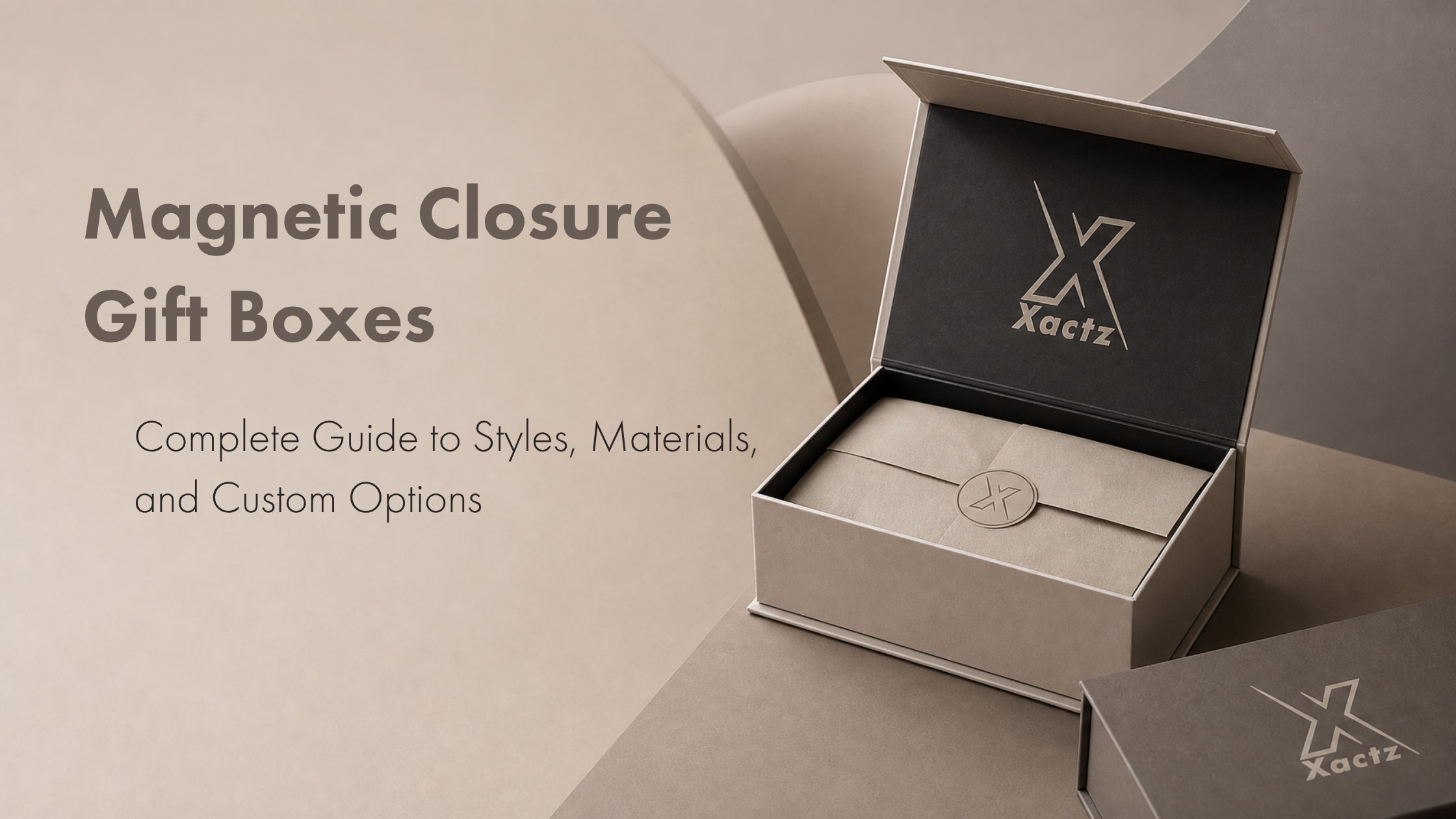
The moment a customer picks up a magnetic closure rigid box, something shifts. The weight is deliberate. The surface is considered. And when the lid lifts and the magnet releases with that quiet, precise snap, the product inside has already been elevated in the customer's perception before they have seen it.
In premium retail, high-end cosmetics, luxury electronics, and corporate gifting, packaging is not a container. It is the first physical expression of brand value. The magnetic closure rigid box has become the defining format of that expression in 2026, combining structural integrity, tactile sophistication, and a fully customizable canvas for brand identity into a single cohesive packaging system.
The global luxury rigid box market was valued at USD 8.84 billion in 2026 and is projected to reach USD 15.84 billion by 2036, driven by accelerating demand from premium DTC brands, corporate gifting programs, and luxury retail across cosmetics, spirits, electronics, and fashion. Magnetic closure formats represent the fastest-growing segment within that market, favored by brands that understand the unboxing moment as a core component of the customer experience rather than an afterthought.
This complete guide covers the structural engineering, style variations, material specifications, surface finish options, sustainability compliance requirements, and factory-direct sourcing strategies that brand managers and procurement teams need to specify and source custom magnetic closure rigid boxes with confidence.
Understanding what a magnetic closure rigid box is made of, and why each component matters, is the foundation of making informed specification decisions that deliver both structural performance and brand impact.
How Magnetic Closure Rigid Boxes Differ From Folding Cartons
Standard folding cartons are manufactured from a single layer of paperboard, shipped flat, and assembled at point of use. They are cost-effective for high-volume, low-margin product categories but provide minimal structural rigidity, no tactile premium, and no mechanism for a considered opening experience.
Magnetic closure rigid boxes are pre-engineered structural systems built from multiple layers of specialist materials, each performing a specific structural or aesthetic function. They do not collapse under pressure, do not feel insubstantial in the hand, and do not communicate commodity. They communicate investment.
Decorative Paper Wrap
The outermost layer of a magnetic closure rigid box is the decorative wrap, the surface that carries the brand. Wrap options include soft-touch art paper for a velvety, low-glare premium finish; coated art paper for high-definition full-color print reproduction; unbleached kraft paper for a natural, sustainability-forward aesthetic; and specialty veneer or textured stock for tactile differentiation at the highest tier of luxury packaging.
The wrap is laminated to the greyboard core using water-based adhesives, ensuring full recyclability of the assembled structure and compliance with EU PPWR recyclability requirements.
High-Density Greyboard Core
The structural backbone of every magnetic closure rigid box is the greyboard core, a dense, compressed paperboard that provides the rigidity, weight, and dimensional stability that defines the format. Greyboard caliper typically ranges from 1.5 mm for compact jewelry, cosmetic, and accessory boxes through 2.0 mm for standard gift and retail formats up to 3.0 mm and above for electronics, spirits, premium hampers, and heavy product applications.
The greyboard core is available in virgin fiber, FSC-certified, and Post-Consumer Recycled (PCR) grades, allowing brands to specify the sustainability credentials of the structural core independently of the decorative wrap and liner specifications.
Concealed Neodymium Magnets and Steel Plates
The magnetic closure mechanism is engineered using neodymium magnets embedded within the greyboard of the lid flap and corresponding steel plates or opposing magnets set into the base panel. Neodymium is the strongest commercially available permanent magnet material, providing a secure, positive closure that does not weaken with repeated use and does not require visible hardware, clasps, or ribbon ties.
The magnet and steel plate positions are precisely engineered during the dieline development phase to ensure consistent closure alignment, correct closure force for the box weight and application, and no magnetic interference with electronic products or payment cards where relevant.
Interior Paper and Liner
The interior liner is the final layer of the magnetic closure rigid box system and the surface the customer sees and touches when the box opens. Interior options include offset-printed paper liners carrying brand colors, patterns, or messaging; velvet or fabric liners for jewelry and watch applications; and thermoformed molded pulp inserts that combine the liner and product protection functions into a single sustainable component.
The interior liner specification is one of the most impactful brand differentiation decisions in the entire box design. A premium exterior with a generic white interior is a missed opportunity. A considered interior that continues the brand language of the exterior transforms the unboxing into a complete brand experience.
The opening mechanic of a magnetic closure rigid box is a core component of the brand experience being designed. Different structural formats serve different product categories, unboxing narratives, and logistics requirements.
Book-Style Hinged Flap

The book-style magnetic closure box is the most widely specified format in luxury gifting, cosmetics, and premium electronics. A single hinged lid opens from the front, held closed by concealed neodymium magnets embedded in the flap and base. The opening motion is smooth, deliberate, and immediately communicates premium quality.
Book-style boxes are available in standard single-compartment configurations and in multi-panel formats with additional interior flaps, ribbon lift tabs, and layered reveal mechanics for complex gifting sets. They are the default format for corporate gifting programs, seasonal retail collections, and premium DTC subscription packaging.
Collapsible Flat-Pack Magnetic Closure Box

The collapsible flat-pack format delivers the full structural and tactile experience of a traditional magnetic closure rigid box with the logistics efficiency of a folding carton. Engineered with precision fold lines and magnetic closure points, flat-pack magnetic boxes ship and store flat, reducing shipping volume by up to 60% compared to fully assembled rigid boxes, and are assembled by the end recipient or at point of fulfillment in seconds without tools or adhesives.
For e-commerce brands managing international freight costs, DTC subscription programs with high monthly volume, and corporate gifting operations with variable order sizes, the flat-pack magnetic closure box is the most cost-efficient path to premium packaging without compromising the unboxing experience.
Two-Door Gatefold

The gatefold magnetic closure box features two panels that open simultaneously from the center, each held by concealed magnets, revealing the product in a symmetrical theatrical presentation. The gatefold format creates a dramatic reveal mechanic that is particularly well suited to hero product launches, limited edition collections, premium fragrance sets, and high-value corporate gifts where the opening moment is intended to be a memorable brand event.
Gatefold boxes are frequently specified with interior trays, ribbon lift tabs, and printed interior panels that extend the brand narrative across every surface visible during the opening sequence.
Drawer with Magnetic Lock

The magnetic drawer box combines the sliding drawer format with a magnetic locking mechanism that holds the inner tray securely within the outer sleeve during transit and handling. The outer sleeve is a fully wrapped rigid structure carrying the exterior brand identity. The inner tray slides out to reveal the product, with the magnetic lock releasing at a precise point in the draw travel to create a controlled, satisfying reveal.
This format is the preferred choice for watches, fountain pens, premium jewelry, high-end skincare, and luxury accessories where the product deserves a presentation format that is itself a collectible object. A ribbon pull tab integrated into the inner tray adds a final layer of considered detail that elevates the experience further.
For brands weighing the decision between traditional fully assembled rigid boxes and collapsible flat-pack magnetic closure formats, the comparison across four key operational dimensions consistently favors flat-pack for e-commerce and high-volume applications.
Shipping Footprint
Fully assembled rigid boxes ship as three-dimensional structures, occupying their full volume in every carton, pallet, and container. Flat-pack magnetic closure boxes ship as two-dimensional panels, reducing the cubic volume of each unit by up to 60% and allowing significantly more units per carton, pallet, and container. For brands importing packaging from factory to warehouse, this volume reduction translates directly into lower freight cost per unit.
Landed Freight Cost
DIM weight pricing by international freight carriers means that volumetric weight, not actual weight, determines freight cost for most packaging shipments. Flat-pack magnetic closure boxes have a dramatically lower DIM weight than assembled rigid boxes, reducing the per-unit freight cost on every shipment. At volumes of 5,000 units and above, the freight cost differential between assembled and flat-pack formats is frequently sufficient to offset the entire per-unit cost premium of the magnetic closure mechanism.
Assembly Requirements
Flat-pack magnetic closure boxes are designed for rapid assembly without tools, adhesives, or specialist equipment. Assembly time per unit is typically under 30 seconds for standard book-style formats, making them fully compatible with e-commerce fulfillment operations, in-house gifting programs, and retail floor assembly.
Best Use Scenarios
Fully assembled rigid boxes remain the preferred specification for retail shelf display, point-of-sale presentation, and applications where the box arrives at the customer fully formed as part of the brand experience. Flat-pack magnetic closure boxes are the preferred specification for e-commerce fulfillment, corporate gifting programs, subscription packaging, and any application where freight cost efficiency and warehouse space optimization are operational priorities.
The surface finish of a magnetic closure rigid box is where structural engineering meets brand identity. Every finish decision communicates something specific about the brand, and the combination of finishes across the exterior wrap, interior liner, and structural components creates the complete sensory signature of the packaging.
Water-Based Soft-Touch Coatings
Soft-touch matte coating applied using water-based formulations has become the dominant surface finish in quiet luxury packaging in 2026. The velvety, low-glare surface enhances grip, communicates restraint and quality, and creates the ideal background for hot foil stamping and blind debossing applications. Water-based soft-touch coatings are fully recyclable, repulpable, and compliant with EU PPWR recyclability requirements, replacing solvent-based plastic laminations without any compromise in tactile performance.
Blind Debossing and Embossing
Blind debossing presses brand marks, logos, patterns, or textures directly into the wrap paper or board surface without ink, foil, or coating. The result is a brand mark defined entirely by shadow and depth, visible only when light catches the surface at an angle. It is the quietest possible brand signal and one of the most powerful in premium packaging in 2026. Blind debossing adds zero chemical layers to the packaging system and has no impact on recyclability.
Embossing raises selected design elements above the surface plane, creating a tactile relief that the customer feels as they run their hand across the box. Combined with soft-touch matte coating, embossed brand marks create a contrast between the smooth coated surface and the raised uncoated relief that is immediately perceived as premium.
Precision Hot Foil Stamping
Hot foil stamping applies metallic foil in gold, silver, rose gold, copper, holographic, or matte black to selected design elements using heat and pressure. The contrast between a soft-touch matte background and a hot foil stamped logo or pattern creates a visual tension that reads as premium from across a room and photographs exceptionally well for e-commerce and social media applications.
Hot foil stamping is classified as repulpable under standard paper recycling assessment frameworks and is compatible with EU PPWR recyclability requirements when applied over water-based coated or uncoated paper substrates.
Custom Inserts
The insert specification completes the magnetic closure rigid box system by securing the product within the box, protecting it during transit, and contributing to the premium presentation at the moment of opening.
Thermoformed molded pulp inserts are manufactured from recycled paper fiber formed into precise three-dimensional product cradles. They are fully recyclable, home compostable, and compatible with premium product presentations across cosmetics, electronics, spirits, and gifting. Molded pulp is the insert specification of choice for brands building EU PPWR compliant packaging systems.
EVA foam inserts provide superior shock absorption for heavy, fragile, or high-value products where drop-test performance is the primary insert specification criterion. EVA foam can be die-cut, CNC-routed, or injection-molded to precise product contours and is available in a full range of colors and densities.
Die-cut cardboard dividers manufactured from FSC-certified or PCR board provide a fully recyclable, zero-tooling-cost insert solution for multi-product gift sets and retail packaging applications where precise product contouring is not required.
In 2026, sustainability compliance is not a brand positioning choice for brands selling into European markets. It is a legal requirement. The EU Packaging and Packaging Waste Regulation applies generally from 12 August 2026, establishing binding recyclability design standards, mandatory declarations of conformity, and Extended Producer Responsibility fee modulation across all packaging categories.
FSC-Certified Boards
Specifying FSC-certified greyboard, wrap paper, and interior liner stock across the magnetic closure rigid box system guarantees that all virgin fiber content originates from responsibly managed forests meeting strict environmental, social, and economic standards. FSC chain-of-custody certification is increasingly required by major European and North American retailers as standard supplier documentation and is the most straightforward way to satisfy retailer sustainability audits without changing structural or aesthetic performance.
Post-Consumer Recycled Content
PCR greyboard incorporates paper and corrugated waste from municipal recycling streams into the structural core of the magnetic closure rigid box, reducing virgin fiber demand and directly supporting circular economy targets under EU PPWR. PCR greyboard is now structurally equivalent to virgin greyboard for most luxury packaging applications and is available at comparable price points as recycled fiber supply chains continue to mature.
Monomaterial Recyclability
Modern magnetic closure rigid boxes engineered with water-based adhesives, water-based soft-touch coatings, soy-based inks, and repulpable hot foil stamping achieve monomaterial paper recyclability across the entire assembled structure. The neodymium magnets are the only non-paper component in a fully optimized magnetic closure rigid box system and are easily removed by the end consumer before recycling, a process that takes under five seconds and is increasingly communicated through on-pack recycling instructions.
Brands specifying magnetic closure rigid boxes for EU market entry should request a full recyclability assessment and Declaration of Conformity from their packaging manufacturer to satisfy PPWR documentation requirements at point of import.
Understanding the cost structure of magnetic closure rigid box production allows brands to make specification decisions that optimize the balance between per-unit cost, logistics efficiency, and brand impact across the full supply chain.
Order Quantity and Minimum Order Quantities
Factory-direct magnetic closure rigid box production typically starts at 500 units per SKU for standard book-style formats and 1,000 units per SKU for complex gatefold and drawer formats with custom insert tooling. Setup costs including dieline development, magnet placement engineering, foil stamping dies, and embossing plates are amortized across the production run, meaning that per-unit costs decrease significantly as volumes scale from 500 to 1,000 to 5,000 units and beyond.
Blanket order programs with scheduled production releases allow brands with predictable annual packaging volumes to lock in volume pricing while maintaining flexible delivery schedules aligned with product launch calendars and seasonal gifting programs.
DIM Weight Efficiency
For brands importing magnetic closure rigid boxes internationally, DIM weight pricing by freight carriers means that the volumetric efficiency of the packaging specification directly impacts the landed cost per unit. Specifying collapsible flat-pack formats where the application allows reduces DIM weight by up to 60% compared to assembled rigid boxes, delivering freight cost savings that compound across every shipment over the life of the packaging program.
Factory-Direct Sourcing Advantages
Sourcing magnetic closure rigid boxes factory-direct through Xactz eliminates distributor and trading company margins, provides direct access to structural engineering and dieline development support, and ensures full visibility into material certifications, production timelines, and quality control processes.
Factory-direct buyers receive FSC chain-of-custody documentation and PCR content declarations as standard, direct engineering support for EU PPWR compliance and EPR registration, prototype sampling before full production commitment, and dedicated account management across the full production lifecycle.
The difference between sourcing through a distributor and sourcing factory-direct is not only cost. It is the depth of technical support, the speed of problem resolution, and the confidence that comes from working directly with the team that builds the box.
Xactz designs and manufactures custom magnetic closure rigid boxes factory-direct, working directly with brand managers, packaging designers, and procurement teams to develop magnetic rigid box systems that deliver premium brand impact, EU PPWR compliance, and optimized landed cost.
Our factory-direct service includes custom dieline development and structural prototyping, FSC-certified and PCR material specifications, full surface finish options including soft-touch matte, hot foil stamping, blind debossing, and UV spot varnish, custom insert engineering in molded pulp, EVA foam, and cardboard dividers, EU PPWR Declaration of Conformity and recyclability assessment, and dedicated production management from prototype to delivery.
To receive a fast and accurate factory-direct quote, prepare the following specifications:
Contact Xactz today to start your custom magnetic closure rigid box project. From first dieline to final delivery, our factory-direct team is with you at every step.
بواسطة Xactz Packaging
16 أغسطس 2026
بواسطة Xactz Packaging
13 أغسطس 2026
بواسطة Xactz Packaging
11 أغسطس 2026
