Table of Contents
Introduction to Zero-Waste Packaging
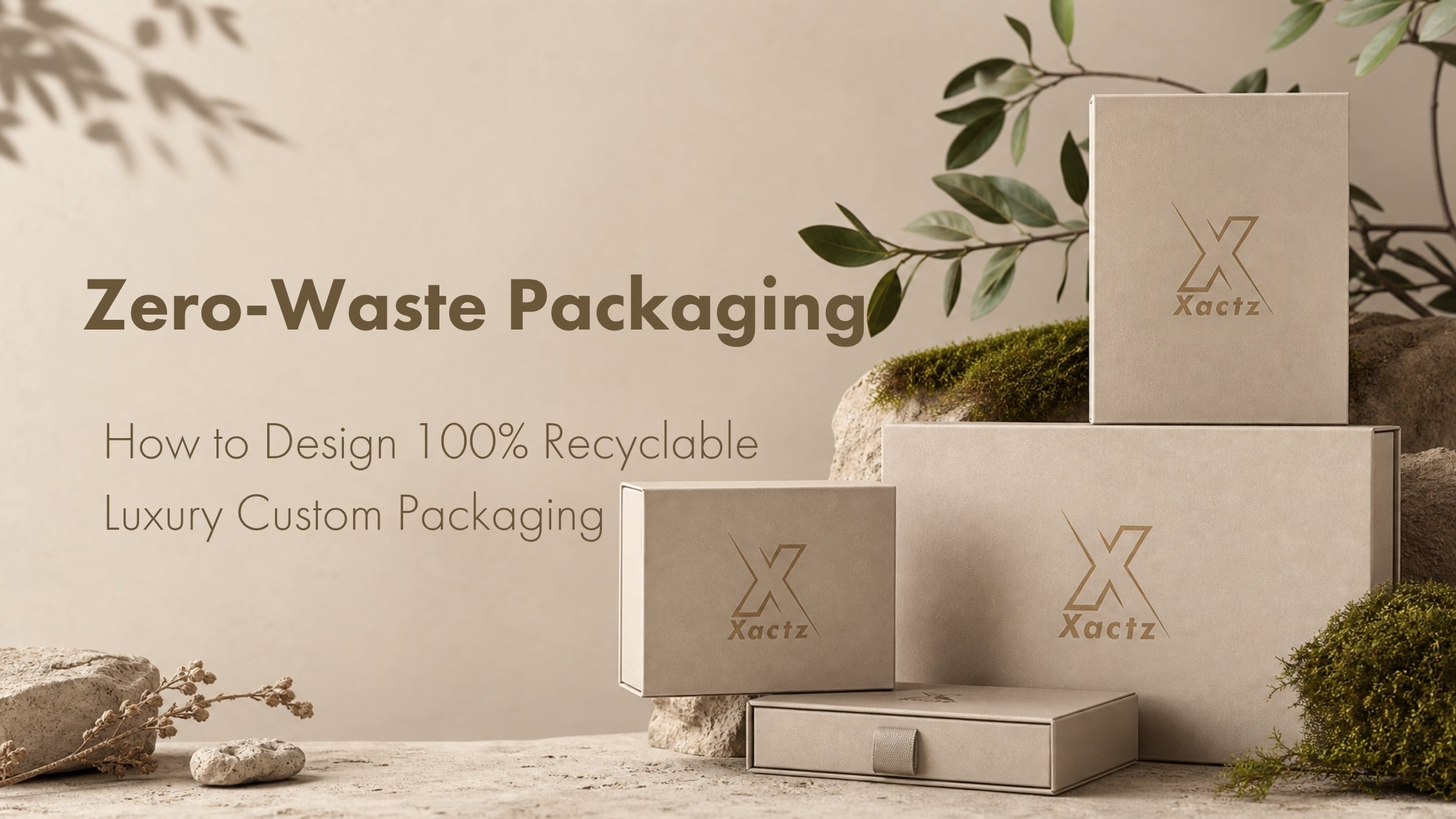
The luxury packaging industry is at a turning point. For decades, premium packaging was synonymous with excess: thick plastic inserts, non-recyclable laminates, synthetic ribbons, and oversized boxes padded with polystyrene foam. That era is ending. In 2026, the most forward-thinking luxury brands understand that true premium quality is not measured by how much material you use, but by how thoughtfully you use it.
Zero-waste packaging is the discipline of designing every component of a package so that it can be fully recovered, recycled, or composted at the end of its life. It is not a compromise on aesthetics or structural performance. It is a higher standard of design.
The market data confirms this shift. Sustainable packaging is no longer a niche preference. It is a baseline consumer expectation. In 2026, brands that fail to align their recyclable luxury packaging with the values of their customers risk losing relevance, regardless of how premium their product is. The conversation has shifted from sustainability as a marketing claim to sustainability as a measurable, system-level outcome. Regulators are tightening expectations, consumers are more informed and more skeptical, and the gap between sustainability claims and real-world impact is under more scrutiny than ever.
This guide walks you through every element of a zero-waste luxury packaging strategy, from the materials and structural design to the inks and closures, so you can build a packaging line that is both beautiful and fully recyclable.
Why Recyclability Is the New Standard in Luxury Packaging
Recyclability has moved from a differentiator to a baseline expectation. Across the packaging industry, decisions now start with one core question: Can this packaging realistically re-enter a material cycle? If the answer is not clear, the packaging will face scrutiny from consumers, regulators, and retail partners alike.
Several converging forces are driving this shift.
Regulatory Momentum
Extended Producer Responsibility (EPR) programs, packaging waste fees, and mandatory reporting requirements are expanding globally. The direction is consistent: packaging that is recyclable, made with recycled content, and aligned with existing recovery infrastructure is increasingly the only viable path forward. Recyclability is no longer just an environmental consideration. It is a strategic risk-management decision for any brand operating at scale.
Consumer Expectations
Today's luxury consumer is highly informed. They research the brands they support, and they expect those brands to reflect their values. A 2026 consumer packaging report confirmed that sustainable packaging is no longer just a thoughtful extra. It is becoming a core part of how consumers evaluate the brands they support. For luxury brands, whose entire value proposition rests on the perception of quality and care, packaging that contradicts those values is a direct liability.
The Circularity Imperative
Packaging that fits cleanly into existing recycling systems, such as paper-based boxes, mono-material designs, and fiber-based inserts, is becoming the industry norm. Complex, mixed-material solutions are losing favor not because they lack innovation, but because they are difficult to recover. Circularity is no longer aspirational. It is assumed.
For sustainable custom boxes and biodegradable gift box packaging, the design challenge is clear: deliver the tactile richness and visual impact of traditional luxury packaging while ensuring every component can be cleanly separated and recycled. The following sections show exactly how to do that.
Sustainable Materials That Deliver a Premium Experience
The foundation of any zero-waste luxury packaging strategy is material selection. The most recyclable materials available today are also among the most beautiful. Here is a breakdown of the three most critical material categories and how to use them to maximum effect.
Custom Paper Partitions as an Alternative to Plastic Inserts and Foam
The interior of a luxury box is where the unboxing experience is made or broken. Traditionally, brands have relied on molded polystyrene foam, vacuum-formed plastic trays, or expanded polyethylene to hold products in place. These materials offer protection, but they are almost universally non-recyclable and create a significant waste burden for the end consumer.
Custom paper partitions, engineered from corrugated board, solid bleached sulfate (SBS) paperboard, or kraft board, offer a fully recyclable alternative that can match or exceed the protective performance of plastic inserts. When designed with precision die-cutting and structural engineering, paper partitions can cradle fragile items, separate multiple products within a single box, and create a clean, architectural interior presentation that elevates the perceived value of the product inside.
Beyond recyclability, paper partitions offer a significant branding advantage. They can be printed, embossed, or finished with water-based coatings to carry brand colors, patterns, or messaging directly on the insert itself. This transforms a functional structural element into a premium brand touchpoint. Sustainable packaging inserts made from paper-based materials are increasingly recognized as the most practical and scalable replacement for plastic in luxury packaging applications, offering protection, aesthetics, and full recyclability in a single solution.
For brands transitioning away from plastic foam, the key specification considerations are paper weight measured in GSM, flute profile for corrugated options, and the precision of the die-cut tolerance. Working with a factory that can engineer custom inserts to your exact product dimensions ensures a snug, secure fit without the need for any supplementary void fill.
Soy-Based Inks for Eco-Friendly Printing
Printing is an often-overlooked dimension of sustainable packaging design. Conventional petroleum-based inks contain volatile organic compounds (VOCs) that are harmful to both human health and the environment during the manufacturing process. They also complicate the recycling of paper and board, because petroleum-based inks are more difficult to remove during the de-inking process at paper mills.
Soy-based inks solve both problems. Derived from a renewable agricultural resource, soy inks release significantly fewer VOCs during manufacturing compared to their petroleum-based counterparts. This reduces air pollution at the point of production and creates a safer working environment in the printing facility.
From a recyclability standpoint, soy inks are substantially easier to remove from paper fibers during the de-inking process. This means that packaging printed with soy-based inks produces cleaner recycled pulp, which in turn supports higher-quality recycled paper production. For brands committed to a fully circular packaging system, specifying soy-based inks is a non-negotiable step.
The performance credentials of soy inks are equally strong. Modern soy-based formulations deliver superior color brightness and vibrancy compared to petroleum inks, making them an ideal choice for the bold, high-fidelity printing that luxury packaging demands. They also offer enhanced rub resistance, ensuring that your packaging arrives at the customer's door looking as pristine as it did when it left the factory.
For sustainable gift boxes that require rich color reproduction, such as deep navy blues, warm golds, or vivid brand palettes, soy-based inks are the professional standard for eco-conscious luxury printing.
Water-Activated Tape and Bio-Ribbons for Secure Closure
The closure of a luxury package is its final seal and the last structural decision that determines whether the entire box can be recycled as a single unit. This is where many otherwise well-designed sustainable packages fail. A corrugated box sealed with conventional polypropylene (PP) plastic tape presents a contamination problem at the recycling facility. The plastic tape must be removed before the cardboard can be processed, and in practice, it rarely is.
Water-activated tape (WAT), also known as gummed paper tape, eliminates this problem entirely. Made from kraft paper with a starch-based adhesive that is activated by water, WAT bonds directly to the surface of corrugated and paperboard boxes. Because both the tape and the adhesive are paper-based, the sealed package can be recycled as a single unit without any separation required. Unreinforced water-activated tape is both biodegradable and compostable, making it one of the most environmentally sound closure options available for e-commerce and luxury packaging.
Beyond its environmental credentials, WAT offers superior functional performance. It creates an exceptionally strong bond that is tamper-evident. Any attempt to open the package without tearing the tape leaves a visible mark, providing an additional layer of security and authenticity assurance for luxury goods. Brands that adopt water-activated tape consistently report more secure seals during transit and stronger alignment with their sustainability commitments.
For decorative closures, the sustainable alternative is bio-ribbon: ribbon manufactured from organic cotton, recycled polyester, or natural raffia. These materials can be composted or recycled depending on the specific fiber content and are a direct replacement for the synthetic satin or nylon ribbons that are standard in conventional luxury packaging. When paired with a wax seal or a branded paper belly band, bio-ribbons deliver the same sense of ceremony and occasion as their synthetic counterparts, with none of the environmental compromise.
Design Considerations for Luxury Sustainable Packaging
Designing luxury packaging that is also 100% recyclable requires a disciplined approach to material specification, structural engineering, and finish selection. The following principles guide best-in-class sustainable luxury packaging design.
Mono-Material Architecture
The single most important design principle for recyclable packaging is mono-material construction. A package made entirely from paper and board, including the box, insert, tissue, tape, and printed elements, can be recycled as a single unit. The moment you introduce a non-paper element such as a plastic window, a metallic laminate, or a synthetic ribbon, you create a separation challenge that most consumers will not resolve correctly. Design every component with the same base material in mind.
Right-Sizing for Efficiency and Impact
Oversized packaging is both wasteful and visually underwhelming. A product that rattles inside a box that is three times its size communicates carelessness, not luxury. Custom-sized boxes that fit your product snugly reduce material use, lower shipping costs, and create a more intentional, considered unboxing experience. Right-sizing is simultaneously the most sustainable and the most premium design decision you can make.
Recyclable Coatings and Finishes
Many luxury finishes such as soft-touch lamination, gloss UV coating, and metallic foil stamping are applied as non-paper layers that contaminate the recycling stream. In 2026, water-based coatings and aqueous varnishes have advanced to the point where they can deliver a premium tactile and visual finish while remaining fully recyclable. Specify water-based matte or gloss coatings instead of plastic laminates. For foil effects, consider hot-stamping with recyclable foil or digital foil alternatives that use minimal material.
Structural Integrity Without Excess
Luxury packaging must protect its contents. The temptation when removing plastic foam is to compensate with heavier board weights, which increases material use and cost. The correct approach is precision engineering: a well-designed paper partition, engineered to the exact dimensions of your product, provides superior protection with less total material than a generic foam insert. Invest in structural design, not material volume.
Transparent Sustainability Communication
Include clear, specific disposal instructions on your packaging. Tell the customer exactly what each component is made from and how to recycle it. In 2026, broad claims like "eco-friendly" or "green" are increasingly scrutinized. Specific, verifiable language such as "This box is made from 100% recycled kraft board and is fully recyclable at kerbside" builds far more trust and credibility with your customer.
Case Studies of Successful Sustainable Packaging Solutions
The transition to zero-waste luxury packaging is not theoretical. Leading brands across beauty, wellness, and consumer goods have already made this shift, and the results demonstrate that sustainability and premium quality are not in conflict. They are complementary.
Beauty and Cosmetics: The Paper-First Pivot
Across the beauty sector, brands have systematically replaced plastic vacuum-formed trays with custom die-cut paper inserts. The result has been a measurable improvement in both sustainability metrics and customer perception. Consumers consistently rate paper-insert packaging as feeling more premium and more intentional than plastic trays, because the precision of a well-engineered paper partition communicates craftsmanship. Brands that have made this transition report that their packaging has become a social media asset, with unboxing content generating organic reach that plastic-insert packaging never achieved.
E-Commerce Retail: The Water-Activated Tape Standard
Several leading direct-to-consumer brands have standardized on water-activated tape as their primary closure solution, eliminating plastic tape entirely from their supply chain. The operational benefits have been significant: WAT requires less tape per package to achieve a secure seal, reducing material consumption per unit. The tamper-evident properties of WAT have also reduced customer service inquiries related to damaged or compromised shipments.
Wellness and Gifting: Soy Ink and Kraft Board as a Brand Identity
A growing number of premium wellness and gifting brands have built their entire visual identity around the natural aesthetic of kraft board and soy-ink printing. Rather than treating sustainable materials as a constraint, these brands have positioned the raw, tactile quality of uncoated kraft as a luxury signal in its own right, one that communicates authenticity, transparency, and craftsmanship. The unbleached, natural palette of kraft board paired with the rich, vibrant color reproduction of soy inks creates a distinctive visual language that is immediately recognizable and deeply aligned with the values of the modern luxury consumer.
Packaging as a Circular System
The most advanced sustainable packaging strategies treat the entire packaging system, not just individual components, as a circular loop. Brands working with packaging partners who prioritize high post-consumer waste (PCW) recycled content, recyclable coatings, and paper-based inserts are building packaging lines where every element can re-enter the material cycle. This system-level thinking is what separates genuinely sustainable packaging from greenwashing.
Benefits of Using Recyclable Luxury Packaging
The business case for investing in recyclable luxury packaging and sustainable gift boxes is compelling across every dimension of brand performance.
Brand Equity and Customer Loyalty
Packaging that reflects a brand's values creates an emotional connection that generic packaging cannot. When a customer opens a beautifully designed, paper-based luxury box and reads that every component is 100% recyclable, they feel good about their purchase. That positive emotional association translates directly into repeat purchases, word-of-mouth referrals, and long-term brand loyalty. Sustainable packaging builds trust, and trust builds revenue.
Social Media and Organic Reach
Unboxing content is one of the most powerful forms of organic marketing available to e-commerce brands. Packaging that is visually distinctive, tactilely engaging, and aligned with the values of the creator's audience generates shares, saves, and comments at a rate that generic packaging cannot match. Zero-waste luxury packaging, with its clean lines, natural textures, and considered design, is inherently shareable.
Regulatory Compliance and Future-Proofing
As EPR regulations and packaging waste legislation continue to expand globally, brands that have already transitioned to fully recyclable packaging will face no compliance burden. Brands that have not will face both financial penalties and the operational disruption of a forced redesign. Investing in sustainable packaging now is an investment in regulatory resilience.
Cost Efficiency at Scale
Right-sized packaging reduces material consumption, lowers dimensional weight shipping costs, and decreases the volume of void fill required. Water-activated tape uses less material per seal than plastic tape. Soy-based inks are cost-competitive with petroleum inks at commercial print volumes. The perception that sustainable packaging is more expensive than conventional packaging is a myth that dissolves at scale.
Environmental Impact
The measurable environmental benefits of a fully recyclable packaging system are significant. Recycled paperboard requires substantially less energy and water to produce than virgin board. Soy-based inks reduce VOC emissions at the point of production. Paper partitions eliminate the plastic foam that would otherwise end up in landfill. Water-activated tape ensures the entire package can be recycled as a single unit. Across every component, the lifecycle impact of a zero-waste luxury package is dramatically lower than its conventional equivalent.
Get Your Factory-Direct Quote from Xactz
Designing 100% recyclable luxury packaging is a precision exercise. Every component, from the board weight and insert geometry to the ink specification and closure system, must be engineered to work together as a coherent, beautiful, and fully recoverable system. That level of precision requires a manufacturing partner with deep expertise in both luxury packaging design and sustainable materials.
At Xactz, we specialize in high-end custom packaging solutions that meet the highest standards of both aesthetic quality and environmental performance. From custom paper partitions engineered to your exact product dimensions, to soy-ink printing on recycled kraft board, to water-activated tape closures, we build packaging that is as responsible as it is beautiful.
Know your specifications? Request a factory-direct quote from Xactz at xactz.com today. Our team is ready to help you design a zero-waste luxury packaging solution that elevates your brand, delights your customers, and stands up to the highest standards of recyclability.
References
- EcoEnclose Editorial Team. Sustainable Packaging Trends for 2026: What Eco-Conscious Brands Need to Know. EcoEnclose, January 26, 2026. https://www.ecoenclose.com/blog/sustainable-packaging-trends-for-2026
- International PaperBox. Packaging Trends 2026: Sustainable, Smart & Stylish Cartons. ipaperbox.com, December 11, 2025. https://www.ipaperbox.com/post/packaging-trends-2026-sustainable-smart-stylish-cartons-what-brands-should-know
- UPrinting. 2026 Consumer Packaging Report: How Sustainability Is Reshaping Brand Trust. uprinting.com. https://www.uprinting.com/blog/sustainable-packaging-builds-trust-and-drives-sales/
- InnoRhino. 3 Sustainable Packaging Inserts to Replace Plastic. innorhino.com. https://innorhino.com/blog/innovation-tech/eco-friendly-insert
- EcoPier Solutions. The Environmental Benefits of Using Soy-Based Ink. ecopiersolutions.com. https://www.ecopiersolutions.com/blog/the-environmental-benefits-of-using-soy-based-ink
- DataIntelo. Soy Ink Market Research Report 2034. dataintelo.com. https://dataintelo.com/report/global-soy-ink-market
- Jota Machinery. Is Water-Activated Tape Really Eco-Friendly? jotamachinery.com. https://www.jotamachinery.com/academy/is-water-activated-tape-really-eco-friendly/
- SuprPack. Why Eco-Friendly Packing Tape Matters for US Brands. suprpack.com. https://suprpack.com/blogs/news/how-to-choose-eco-friendly-packing-tape-for-your-brand-in-2026