The global jewellery box packaging market is forecast to expand from USD 197.11 billion in 2026 to USD 319.13 billion by 2035, growing at a compound annual growth rate of 5.5% over the next decade. That is not a packaging statistic. That is a brand investment statistic. It tells you that jewellery brands globally are increasing their packaging spend, raising their material standards, and recognising that the box is not a container for the jewellery. The box is the first physical expression of the brand, and it is doing commercial work before the jewellery is even seen.
More than 50% of consumer attention in the jewellery category is captured by the packaging before the product itself. The tactile interaction with the box, the weight of the lid, the resistance of the closure, the texture of the surface, and the reveal of the interior, all of these moments are forming the perceived value of the jewellery inside before the customer has seen a single stone or setting.
This guide covers every major jewellery packaging format, the finish combinations that perform best in each category, and the construction details that separate premium jewellery packaging from average jewellery packaging in 2026.
Table of Contents
Why Jewellery Packaging Is a Brand Asset, Not a Cost Line
The jewellery purchase is one of the most emotionally charged retail transactions a consumer makes. Whether it is a self-purchase, a proposal, an anniversary gift, or a milestone celebration, the moment of receiving jewellery is a moment the customer will remember. The packaging is the physical frame around that memory.
A well-executed jewellery box extends the emotional impact of the purchase. It slows the reveal. It builds anticipation. It communicates that the brand has invested in the experience of receiving the jewellery, not just in the jewellery itself. In 2026, the gifting experience has become the product. Brands that understand this are specifying packaging with thoughtful tactile touches, soft-touch outer sleeves, ribbon pulls, textured specialty papers, and velvet-lined interiors that turn the unboxing into a multi-sensory ceremony.
Brands that do not understand this are shipping their jewellery in generic cotton-filled cardboard boxes and wondering why their customer retention and gifting conversion rates are underperforming.
The commercial logic is straightforward. Jewellery packaging that looks and feels premium increases the perceived value of the jewellery inside. Higher perceived value supports higher price points, higher gifting desirability, and stronger repeat purchase behaviour. The packaging investment pays for itself in brand equity, not just in units shipped.
Ring Boxes: The Highest-Stakes Format in Jewellery Packaging
The ring box is the most emotionally loaded format in all of jewellery packaging. It is the format most associated with proposals, engagements, and milestone gifting. The moment a ring box is produced, the emotional temperature of the room changes. The packaging must be worthy of that moment.
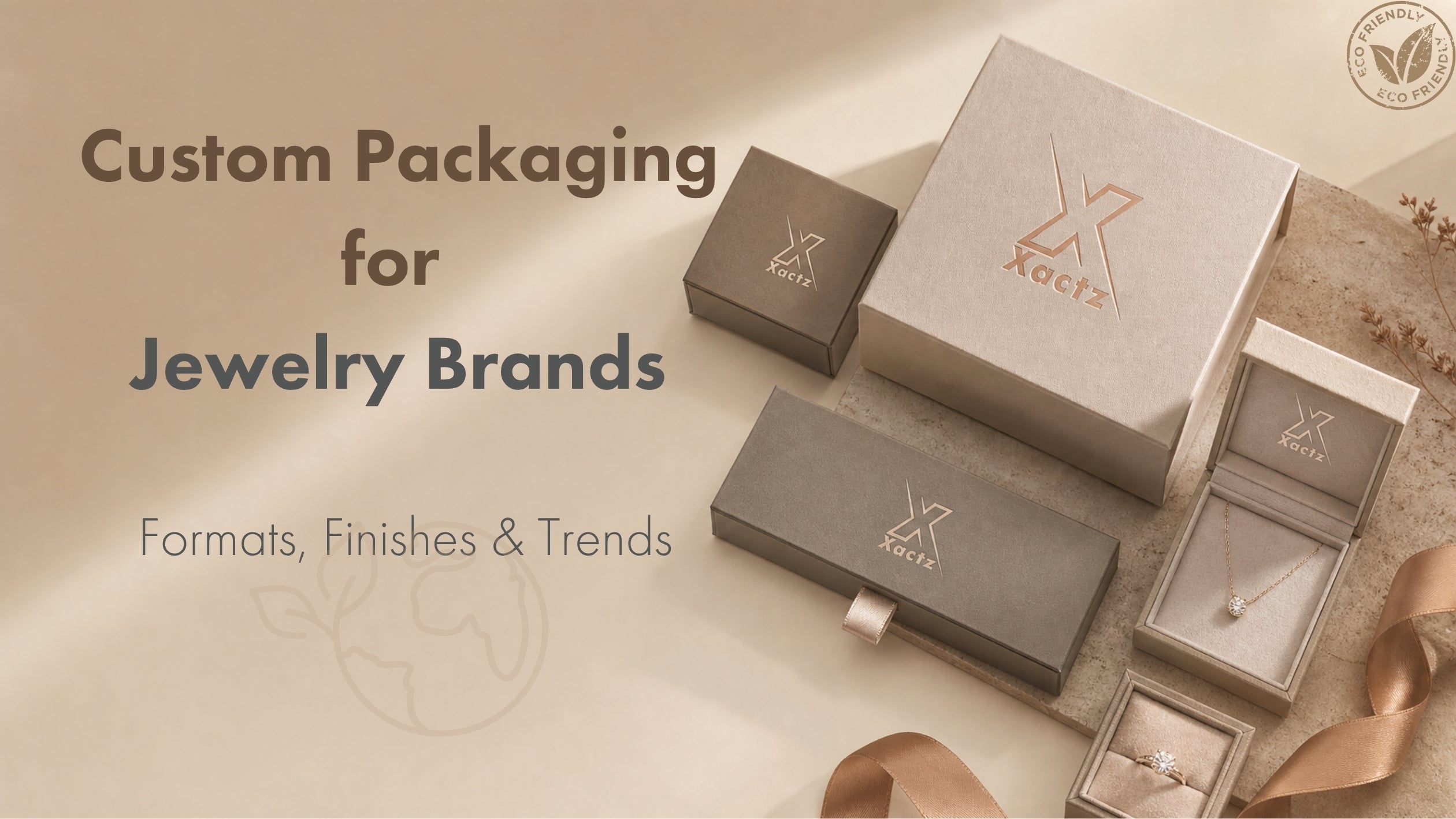
In 2026, the defining trend in ring box design is the monochromatic velvet revival. Deep, saturated, monochromatic tones are replacing the traditional bright reds and royal blues of the past. Emerald green, deep terracotta, moody charcoal, and rich navy are dominating production. The structural board weight is increasing, with heavier grammage delivering the premium hand weight that communicates quality at the moment of handling. Dense, short-pile velvet lining in a matching or complementary tone creates an immediate impression of luxury that standard cotton-fill interiors cannot replicate.
The exterior finish trend is moving decisively toward tactile surfaces over loud branding. Blind debossing, micro-textures, and soft-touch coatings are replacing oversized logos and heavy gloss metallic prints. A subtly debossed brand mark on a matte soft-touch exterior communicates far more sophistication than a large gloss foil stamp on a smooth coated surface. The restraint is the signal. It tells the customer that the brand is confident enough in its quality that it does not need to shout.
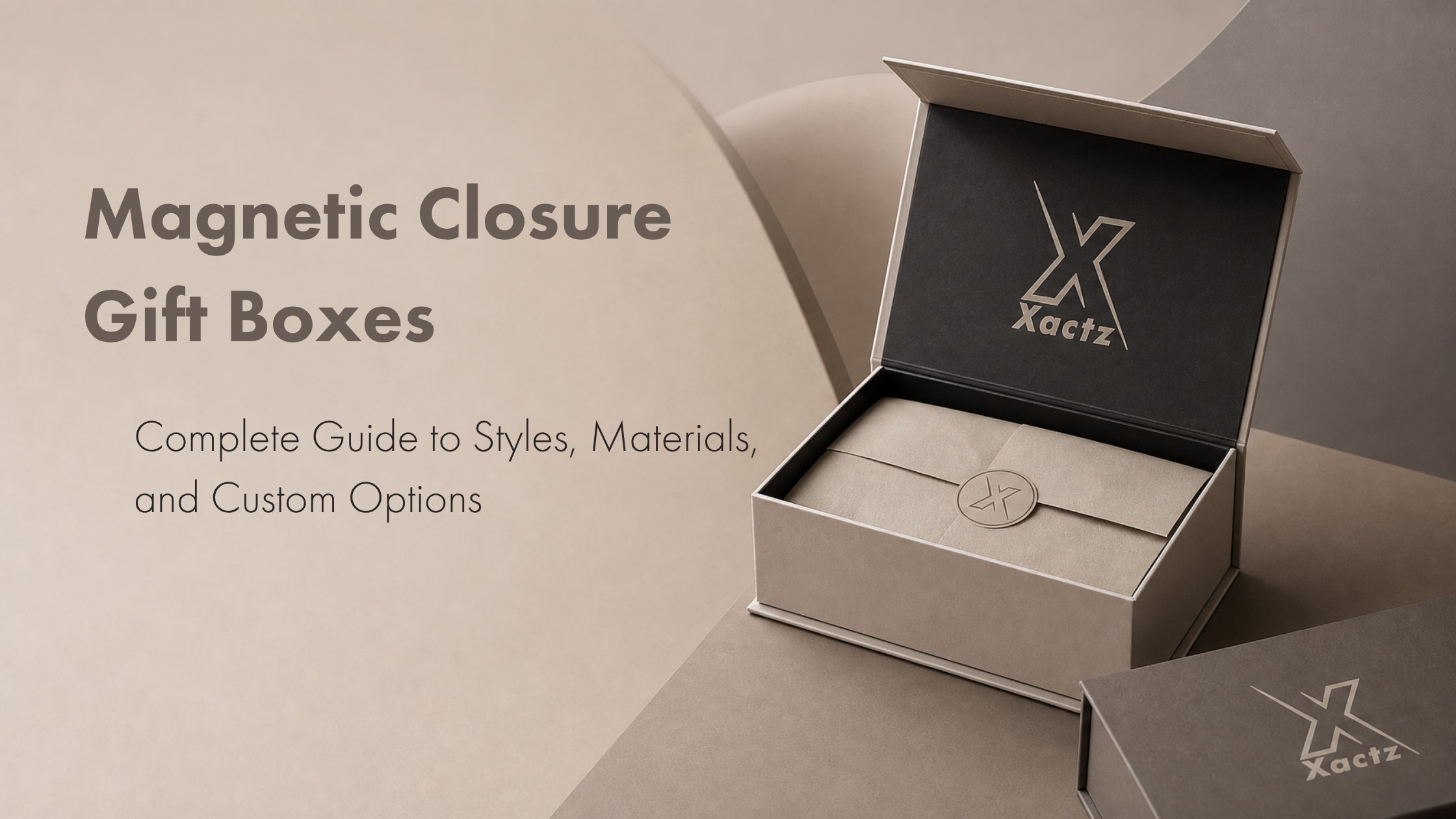
The magnetic closure is the standard closure specification for premium ring boxes in 2026. The pull strength of the magnet, the smoothness of the lid action, and the clean snap of the closure are all tactile signals that the customer registers before they see the ring. A weak or inconsistent magnetic closure undermines the entire premium positioning of the box, regardless of how well the exterior finish has been executed.
Necklace Boxes: Length, Presentation, and the Reveal Sequence
The necklace box presents a different set of design challenges from the ring box. The format must accommodate a longer, more delicate product, present the necklace in a way that showcases the design and craftsmanship, and create a reveal sequence that is as emotionally resonant as the ring box despite the very different product geometry.
The two primary necklace box formats are the long rectangular rigid box and the square rigid box with a deep interior. The long rectangular format is the standard for pendant necklaces and chains, with a velvet or suede-lined interior channel that holds the chain flat and presents the pendant at the centre of the interior. The square format is used for statement necklaces and chokers, with a wider interior that allows the full necklace to be displayed in a single view on opening.
The ribbon pull is the most commercially effective interior detail for necklace boxes. The necklace is laid over the ribbon, and the customer lifts the ribbon to raise the necklace from the interior in a single, smooth, ceremonial motion. This transforms the reveal from a simple extraction into a curated brand moment that drives gifting desirability and social media shareability at a level that a standard interior cannot match.
The exterior finish for necklace boxes follows the same direction as ring boxes in 2026. Monochromatic matte finishes, subtle tactile textures, and restrained branding details are the defining aesthetic. The colour palettes trending in 2026 for jewellery packaging are soft beiges, muted greys, warm off-whites, and deep saturated tones including navy, forest green, and charcoal. These palettes communicate warmth, authenticity, and considered luxury in a way that bright, digitally stark colours do not.
Bracelet Trays and Bangle Boxes: Display, Protection, and Gifting
The bracelet tray and bangle box formats serve a dual purpose that ring and necklace boxes do not. They must present the bracelet or bangle attractively for retail display as well as for gifting. The interior construction must hold the product securely during display and shipping while presenting it in the most visually appealing orientation for the customer.
The bracelet tray format uses a shallow, wide interior with a velvet or leatherette surface and a fitted channel or pillow that holds the bracelet in a consistent presentation position. The tray format is typically used within a rigid outer box, creating a two-layer reveal where the outer box is opened to reveal the tray, and the tray presents the bracelet. This two-layer reveal extends the unboxing sequence and adds a second moment of brand impact.
The bangle box is a cylindrical or square rigid format with a deep interior and a velvet-lined base that holds the bangle upright or flat depending on the design. The cylindrical bangle box is one of the most distinctive formats in jewellery packaging, with a strong shelf presence and an immediately recognisable silhouette that communicates premium quality before the customer has touched the box.
Custom foam inserts, velvet-covered card trays, and suede-lined pillow inserts are all available as interior construction options for bracelet and bangle formats. The interior construction choice should be driven by the specific geometry of the bracelet or bangle being packaged, the retail display requirements, and the gifting experience the brand wants to create.
Jewellery Gift Sets: Full Packaging Systems for Multi-Piece Collections
The jewellery gift set format is the highest-value packaging opportunity in the jewellery category. A well-executed gift set packaging system communicates the full breadth of the brand's collection, creates a premium gifting experience that drives purchase at key gifting occasions, and establishes a visual brand world that individual piece packaging cannot achieve on its own.
The standard jewellery gift set format is a large rigid outer box with a fitted interior tray system that holds multiple pieces in individual, velvet-lined compartments. The outer box exterior carries the full brand identity, the primary finish detail, and the brand mark. The interior tray system is designed to present each piece in its optimal orientation, with sufficient separation between pieces to prevent contact damage during shipping and handling.
The magnetic closure is the standard closure for gift set outer boxes. The ribbon pull is integrated into the interior tray system, allowing the customer to lift the full tray from the outer box in a single, smooth motion to reveal the complete collection. This two-stage reveal, outer box opening followed by tray reveal, is the most commercially effective unboxing sequence in jewellery gifting, creating two distinct moments of brand impact within a single packaging system.
Seasonal gift set packaging is one of the strongest growth areas in jewellery packaging for 2026. Christmas, Valentine's Day, Mother's Day, and anniversary gifting are all driving demand for premium jewellery gift set packaging that communicates occasion, luxury, and considered brand investment in a single, unified visual statement.
The Finish Combinations That Perform Best in Jewellery Packaging
In 2026, the finish direction in jewellery packaging is unanimous across every major market. Monochromatic matte finishes, subtle tactile textures, and restrained single finish details are outperforming loud, multi-finish, heavily branded packaging in every premium jewellery category.
The most commercially proven finish combination for premium jewellery packaging in 2026 is a matte soft-touch or touch-feel texture exterior with a single blind deboss or matte foil brand mark. This combination delivers a surface that is immediately perceived as premium at first touch, a brand mark that communicates confidence and restraint, and a colour palette that works across every jewellery category from bridal to fashion to fine.
The velvet interior remains the gold standard for jewellery packaging interior construction. Short-pile velvet in a deep, saturated tone, matched or complementary to the exterior colour, communicates luxury at the moment of opening that no other interior material can replicate. Suede and leatherette are strong alternatives for brands seeking a more contemporary or fashion-forward interior aesthetic.
The ribbon pull is the single interior detail that most directly drives gifting desirability and unboxing engagement. It transforms the reveal from a functional extraction into a ceremonial brand moment. For any jewellery packaging format where the product is presented in a deep interior, the ribbon pull is the specification that most clearly separates premium packaging from standard packaging.
Sustainable materials are no longer optional in premium jewellery packaging. FSC-certified papers, recyclable rigid board construction, and soy-based inks are baseline specifications for brands selling into European and North American markets in 2026. The key development in sustainable jewellery packaging is that sustainability and premium aesthetics are no longer in tension. Recycled board wrapped in FSC-certified uncoated specialty paper with a blind deboss brand mark is both environmentally responsible and visually sophisticated.
Colour Palettes for Jewellery Packaging in 2026
The colour direction for jewellery packaging in 2026 is defined by warmth, restraint, and authenticity. Soft beiges, muted greys, warm off-whites, and sun-bathed neutral tones are the primary palette for brands positioning in the contemporary luxury and fine jewellery segments. These colours communicate a quiet, considered luxury that resonates with consumers who are increasingly sceptical of loud, digitally processed brand aesthetics.
Deep saturated tones including navy blue, forest green, deep burgundy, moody charcoal, and rich terracotta are the primary palette for brands positioning in the bridal, occasion, and prestige gifting segments. These colours communicate heritage, authority, and emotional weight. They make diamonds and coloured gemstones appear more vivid under showroom and natural lighting, and they photograph exceptionally well for e-commerce and social media product imagery.
Pantone's 2026 colour of the year, Cloud Dancer, a billowy, balanced white with an ethereal, calming neutral presence, is influencing jewellery packaging colour specifications across the premium and fine jewellery segments. Brands specifying packaging in Cloud Dancer and its adjacent warm neutral tones are communicating a design sensibility that is contemporary, considered, and aligned with the broader 2026 aesthetic direction in luxury consumer goods.
What to Specify When Briefing a Jewellery Packaging Manufacturer
The quality of the brief determines the quality of the sample. Jewellery packaging manufacturers need specific, measurable information to produce a sample that accurately represents the brand's requirements. Vague briefs produce generic samples. Specific briefs produce premium results.
Every jewellery packaging brief should include the exact product dimensions with a minimum 2mm clearance specification on all interior sides. The exterior finish specification should include the paper or material reference, the colour reference using Pantone or a physical swatch, the finish type, and the brand mark specification including placement, size, and finish method. The interior construction specification should include the lining material, colour, and pile depth for velvet, or the material and texture reference for suede or leatherette. The closure specification should include the closure type, the magnet pull strength requirement, and the lid action preference.
The structural board weight should be specified at a minimum of 1200g for premium jewellery packaging, with 1500g recommended for gift set outer boxes and any format where premium hand weight is a primary brand signal. The ribbon pull specification should include the ribbon width, colour, and material, and the attachment method.
Custom Jewellery Packaging at Xactz
Xactz is a luxury custom packaging manufacturer based in China, ranked in the top 5% of exhibitors at Packaging Premiere and PCD Milan 2026, Packaging Innovations and Empack Birmingham 2026, and Paris Packaging Week 2026. Our manufacturing facilities span over 40,000 sqm across Huizhou and Shenzhen, with fully automated and semi-automated production capabilities and an 18-point in-house quality control system applied to every production run.
We manufacture custom jewellery packaging across every format covered in this guide, ring boxes, necklace boxes, bracelet trays, bangle boxes, and full jewellery gift set systems, with MOQ from 100 units, 1 to 3 day sample turnaround, and 10 to 18 day production turnaround. We have a dedicated department for startup brands and growing jewellery labels placing their first custom packaging orders, as well as enterprise micro-order capabilities for established brands managing multiple SKUs across multiple markets.
Our certifications include ISO 9001:2015, FSC certification (SGSHK-COC-332603), TUV Rheinland third-party factory audit verification, FDA compliance, and EU 94/62/EC. We deliver worldwide across 60+ countries, serving jewellery brands across Europe, North America, Southeast Asia, the Middle East, and beyond.
If you are specifying custom jewellery packaging for a new collection, a seasonal gift set, or a full brand packaging system, contact Xactz for a quote at xactz.com/pages/contact-us or visit xactz.com to explore our full manufacturing capabilities.