Table of Contents
The Era of Substantiated Sustainability
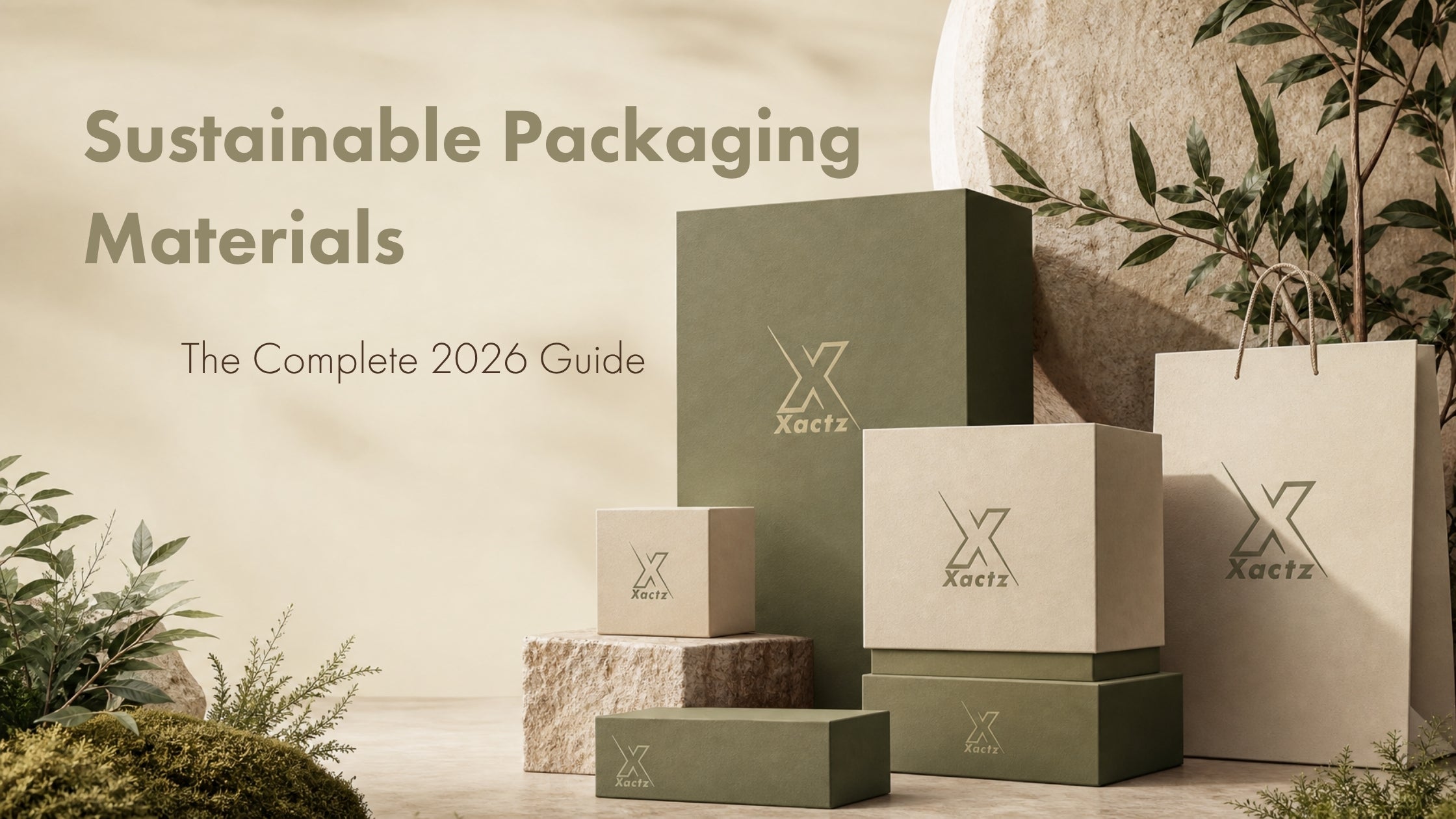
Sustainable packaging has undergone a fundamental shift. Unsubstantiated eco-friendly claims and vague greenwashing terms no longer satisfy consumers, retail buyers, or compliance boards. Named the number one packaging trend for 2026 by Innova Market Insights, Substantiated Sustainability signals that brands must now back up every environmental claim with verifiable material data, supply-chain certifications, and end-of-life recyclability metrics.
The regulatory environment has accelerated this shift dramatically. The EU Packaging and Packaging Waste Regulation (PPWR) entered into force on 11 February 2025 and applies generally from 12 August 2026, establishing binding recyclability requirements, mandatory declarations of conformity, and Extended Producer Responsibility fee modulation across all packaging categories. For brands sourcing custom packaging for European markets, compliance is no longer optional. It is a legal baseline.
Beyond regulation, consumer expectations have shifted permanently. Buyers in premium retail, cosmetics, gifting, and food categories now actively research the environmental credentials of packaging before making purchase decisions. Brands that cannot substantiate their sustainability claims are losing shelf space, retail partnerships, and consumer trust at an accelerating rate.
This guide breaks down the core sustainable substrate categories, structural choices, compliance standards, finish specifications, and cost levers that brands and procurement teams need to source eco-compliant custom packaging with confidence in 2026 and beyond.
Key Sustainable Packaging Materials
Choosing the right substrate sets the foundation for structural strength, print quality, surface finish compatibility, and end-of-life recyclability. Each material category serves different product weights, aesthetic requirements, and compliance targets.
FSC-Certified Paperboard
Forest Stewardship Council certification ensures that all virgin wood fibers used in paperboard production originate from responsibly managed forests that meet strict environmental, social, and economic standards. FSC-certified board is available across the full range of packaging grades including solid bleached sulfate (SBS), coated unbleached kraft (CUK), and folding boxboard (FBB), making it the most versatile sustainable substrate for luxury rigid boxes, folding cartons, and premium gift packaging.
For brands selling into European retail, FSC certification on both the outer wrap and interior liner of rigid boxes is increasingly required by major retailers as part of their supplier sustainability audits. Specifying FSC-certified board is the most straightforward way to demonstrate responsible sourcing and satisfy retailer compliance requirements without changing the structural or aesthetic performance of the packaging.
Post-Consumer Recycled (PCR) Content
PCR materials are derived from paper and corrugated waste collected through municipal recycling streams and reprocessed into new board. Incorporating PCR content into the inner greyboard core of rigid boxes or the substrate of folding cartons reduces virgin fiber demand, lowers the carbon footprint of production, and directly supports circular economy targets under EU PPWR.
PCR greyboard is now structurally equivalent to virgin greyboard for most luxury packaging applications and is increasingly available at comparable price points as recycled fiber supply chains mature globally. Brands specifying PCR content should request a certified PCR percentage declaration from their manufacturer to substantiate claims in compliance documentation and consumer-facing communications.
Sugarcane Bagasse and Agricultural Byproducts
Bagasse is the fibrous residue remaining after sugarcane juice extraction, a material that would otherwise be incinerated or sent to landfill. Processed into paperboard or molded pulp, bagasse delivers structural performance comparable to wood-fiber board while diverting agricultural waste from disposal streams and reducing dependence on forestry resources entirely.
Bagasse-based packaging is particularly well suited to beauty, fine food, and wellness categories where the natural, unbleached aesthetic of the material reinforces the brand's sustainability narrative. It is fully compostable, home-recyclable in most municipal systems, and compatible with water-based coatings and soy-based inks for surface decoration.
Kraft Paperboard
Unbleached kraft board retains the natural brown fiber color of wood pulp, eliminating the bleaching chemicals required for white board production and reducing the overall chemical load of the manufacturing process. Kraft board is widely used in e-commerce packaging, retail bags, and secondary packaging where the natural aesthetic aligns with the brand's sustainability positioning. It accepts flexographic and digital printing directly and is fully compatible with water-based coatings.
Regulatory Landscape: Navigating EU PPWR and EPR Compliance
Regulatory bodies across Europe and North America are transforming sustainability from a voluntary brand choice into a binding legal obligation. Understanding the compliance roadmap is essential for any brand sourcing packaging for international markets in 2026.
EU Packaging and Packaging Waste Regulation (PPWR)
The PPWR is the most comprehensive packaging regulation in the world and sets the compliance baseline for all packaging placed on the EU market. Key requirements include mandatory recyclability design standards for all packaging by 2030, minimum recycled content thresholds for plastic packaging, mandatory declarations of conformity and technical files for all packaging formats, and restrictions on unnecessary packaging formats and excessive void fill.
From 12 August 2026, the general application of PPWR rules means that brands importing packaging into EU markets must be able to demonstrate compliance with recyclability design requirements and provide documentation supporting their material certifications. Packaging that cannot be demonstrated to be recyclable in practice and at scale by 2035 will be prohibited from the EU market entirely.
Extended Producer Responsibility (EPR) Fee Modulation
EPR schemes require brands that place packaged products on the market to contribute financially to the cost of collecting, sorting, and recycling their packaging at end of life. Under the PPWR framework, EPR fees are modulated based on the recyclability and recycled content of the packaging, meaning that brands using fully recyclable, FSC-certified, or high-PCR-content packaging pay lower EPR fees than brands using non-recyclable or mixed-material formats.
For procurement teams calculating the total cost of packaging ownership, the EPR fee differential between compliant and non-compliant packaging formats can be significant, particularly at high volumes. Transitioning to compliant sustainable materials is not only a regulatory requirement but a direct cost optimization lever.
US Extended Producer Responsibility
In the United States, EPR legislation for packaging is advancing at the state level, with California, Colorado, Maine, and Oregon having enacted packaging EPR laws that require producers to register, report, and contribute to packaging recovery programs. Brands sourcing packaging for the US market should monitor state-level EPR developments and ensure their packaging specifications are designed for recyclability in the US single-stream recycling infrastructure.
Molded Pulp Inserts vs Plastic Foam
Replacing traditional expanded polystyrene (EPS) foam inserts with molded pulp is one of the highest-impact single steps a brand can take toward achieving full packaging circularity. The comparison between the two materials is decisive across every sustainability metric.
Molded Pulp Inserts
Molded pulp inserts are manufactured from recycled paper fiber or agricultural byproduct pulp, formed under heat and pressure into precise three-dimensional shapes that cradle and protect products during transit. Modern thermoformed molded pulp delivers smooth, dense surfaces that are compatible with premium product presentations in cosmetics, electronics, spirits, and luxury gifting.
Molded pulp is fully recyclable in standard paper recycling streams, home compostable in most jurisdictions, and biodegradable at end of life. It provides excellent cushioning performance for products up to moderate drop-test requirements and can be engineered with precise product contours, multiple product cavities, and integrated ribbon lift tabs for luxury unboxing applications.
For brands transitioning from foam to molded pulp, the tooling investment for custom-shaped inserts is amortized across production runs and is typically recovered within two to three production cycles through the material cost differential between molded pulp and foam.
Expanded Polystyrene (EPS) Foam
EPS foam is lightweight, low-cost, and provides excellent shock absorption for heavy or fragile products. However, it is not recyclable in standard municipal recycling streams, is not biodegradable, and is increasingly restricted or banned in packaging applications across EU member states and several US jurisdictions. Under EU PPWR, EPS foam inserts in consumer packaging will face increasing regulatory pressure through 2030.
Die-Cut Cardboard Dividers
For multi-product sets and gift packaging applications where precise product contouring is not required, die-cut cardboard dividers offer a fully recyclable, cost-effective alternative to both foam and molded pulp. Cardboard dividers can be manufactured from FSC-certified or PCR board, require no tooling investment, and can be adjusted for new product configurations without additional setup costs.
Finishes, Coatings, and Inks: Maintaining Full Recyclability
A paperboard box made from 100% FSC-certified or PCR-recycled content can be rendered non-recyclable by a single non-compliant coating or lamination layer. Ensuring that every decorative element applied to the packaging surface is compatible with paper recycling streams is essential for maintaining the recyclability credentials of the entire packaging system.
Water-Based Soft-Touch Coatings
Water-based soft-touch coatings replace traditional solvent-based plastic laminations with a fully recyclable, repulpable alternative that delivers equivalent tactile performance. The velvety, low-glare surface that has become the dominant finish in quiet luxury packaging in 2026 is achievable using water-based formulations that are fully compatible with EU PPWR recyclability requirements and standard paper recycling infrastructure.
Specifying water-based soft-touch coatings instead of plastic lamination is the single most impactful finish decision a brand can make to maintain full recyclability while preserving premium aesthetics.
Soy-Based and Vegetable-Based Inks
Conventional petroleum-based inks contain volatile organic compounds (VOCs) that complicate the de-inking process during paper recycling. Soy-based and vegetable-based inks are fully de-inkable in standard paper recycling streams, contain significantly lower VOC levels, and produce equivalent print quality across offset, flexographic, and digital printing processes.
For brands printing directly onto kraft or recycled board substrates, soy-based inks are the standard specification for maintaining full recyclability and satisfying retailer sustainability audit requirements.
Blind Debossing and Embossing
Pressing brand marks, patterns, or textures directly into the wrap paper or board surface without ink or coating adds zero chemical layers to the packaging system and has no impact on recyclability. Blind debossing is the most sustainability-neutral decorative technique available and is increasingly specified by premium brands as a quiet luxury brand signal that aligns with both aesthetic and compliance objectives.
Hot Foil Stamping
Metallic foil applied by hot stamping disperses into fine particles during the paper de-inking and repulping process and does not prevent the base paper from being recycled. Hot foil stamping is classified as repulpable under standard paper recycling assessment frameworks and is compatible with EU PPWR recyclability requirements when applied over water-based coated or uncoated paper substrates.
Coatings to Avoid
Solvent-based plastic laminations, polyethylene (PE) coatings, and UV-cured plastic coatings applied as full-surface laminations are not compatible with standard paper recycling streams and will render packaging non-recyclable under EU PPWR assessment criteria. Brands transitioning existing packaging specifications to compliance should audit all current coating and lamination specifications and replace non-compliant layers with water-based alternatives.
Cost Optimization, MOQs, and Factory-Direct Sourcing
Transitioning to sustainable packaging materials does not require sacrificing margin. With the right sourcing model, material specifications, and volume strategy, sustainable packaging can be cost-neutral or cost-positive compared to conventional alternatives when EPR fee savings, retailer compliance premiums, and consumer willingness-to-pay for sustainable packaging are factored into the total cost calculation.
Right-Sizing and Structural Optimization
Reducing packaging dimensions to the minimum required for product protection and presentation reduces material consumption, lowers unit cost, and reduces the EPR fee liability associated with packaging weight placed on the market. Factory-direct structural engineering support allows brands to optimize box dimensions, board thickness, and insert configuration before committing to production tooling.
Collapsible and Flat-Pack Formats
For e-commerce brands managing freight costs and warehouse space, collapsible flat-pack rigid box formats reduce shipping volume by up to 60% compared to fully assembled rigid boxes while maintaining the premium unboxing experience at the point of delivery. Flat-pack formats also reduce the carbon footprint of international freight, which is increasingly relevant for brands calculating Scope 3 emissions under corporate sustainability reporting frameworks.
Minimum Order Quantities (MOQs)
Factory-direct sustainable packaging production typically starts at 500 to 1,000 units per SKU for rigid box formats and 1,000 to 2,000 units for folding carton and molded pulp insert programs. At entry-level MOQs, tooling costs for custom molded pulp inserts and die-cut structures are amortized across the run. Unit costs decrease significantly as volumes scale, and blanket order programs with scheduled releases allow brands to lock in volume pricing while managing inventory levels.
Factory-Direct Advantages
Sourcing sustainable packaging factory-direct through Xactz eliminates distributor and trading company margins, provides direct access to material certification documentation including FSC chain-of-custody certificates and PCR content declarations, and ensures full visibility into production timelines and quality control processes. Factory-direct buyers also receive direct engineering support for EU PPWR compliance documentation, EPR registration support, and prototype sampling before full production commitment.
Get Your Sustainable Packaging Quote from Xactz
Engineered for performance and eco-compliance, Xactz offers factory-direct custom packaging solutions across the full range of sustainable substrates, structural formats, and surface finishes. Our team works directly with brand managers, packaging designers, and procurement teams to develop sustainable packaging systems that meet EU PPWR compliance requirements, satisfy retailer sustainability audits, and deliver the premium aesthetics your brand demands.
To receive a fast and accurate factory-direct quote, prepare the following specifications before reaching out:
- Dimensions: Length, Width, and Depth in millimeters or inches (internal and external)
- Substrate Preference: FSC-Certified Board, PCR Content Percentage, Sugarcane Bagasse, or Kraft
- Surface Finish: Water-Based Soft-Touch, Blind Debossing, Hot Foil Stamping, or Soy-Based Ink Print
- Insert Requirements: Thermoformed Molded Pulp Tray, Die-Cut Cardboard Dividers, or No Insert
- Volume and Target Market: Order quantities and destination region (EU, US, or Global)
- Compliance Requirements: EU PPWR Declaration of Conformity, FSC Chain-of-Custody, or EPR Documentation
Request your factory-direct sustainable packaging quote today and receive:
- Structural engineering and right-sizing consultation
- FSC and PCR material certification documentation
- EU PPWR compliance and recyclability assessment
- EPR fee modulation guidance for EU market entry
- Production timeline and MOQ confirmation
- Prototype sampling before full production commitment
Contact Xactz to start your sustainable packaging project.