Table of Contents
The Evolving Role of Custom Gift Packaging
The Market Landscape
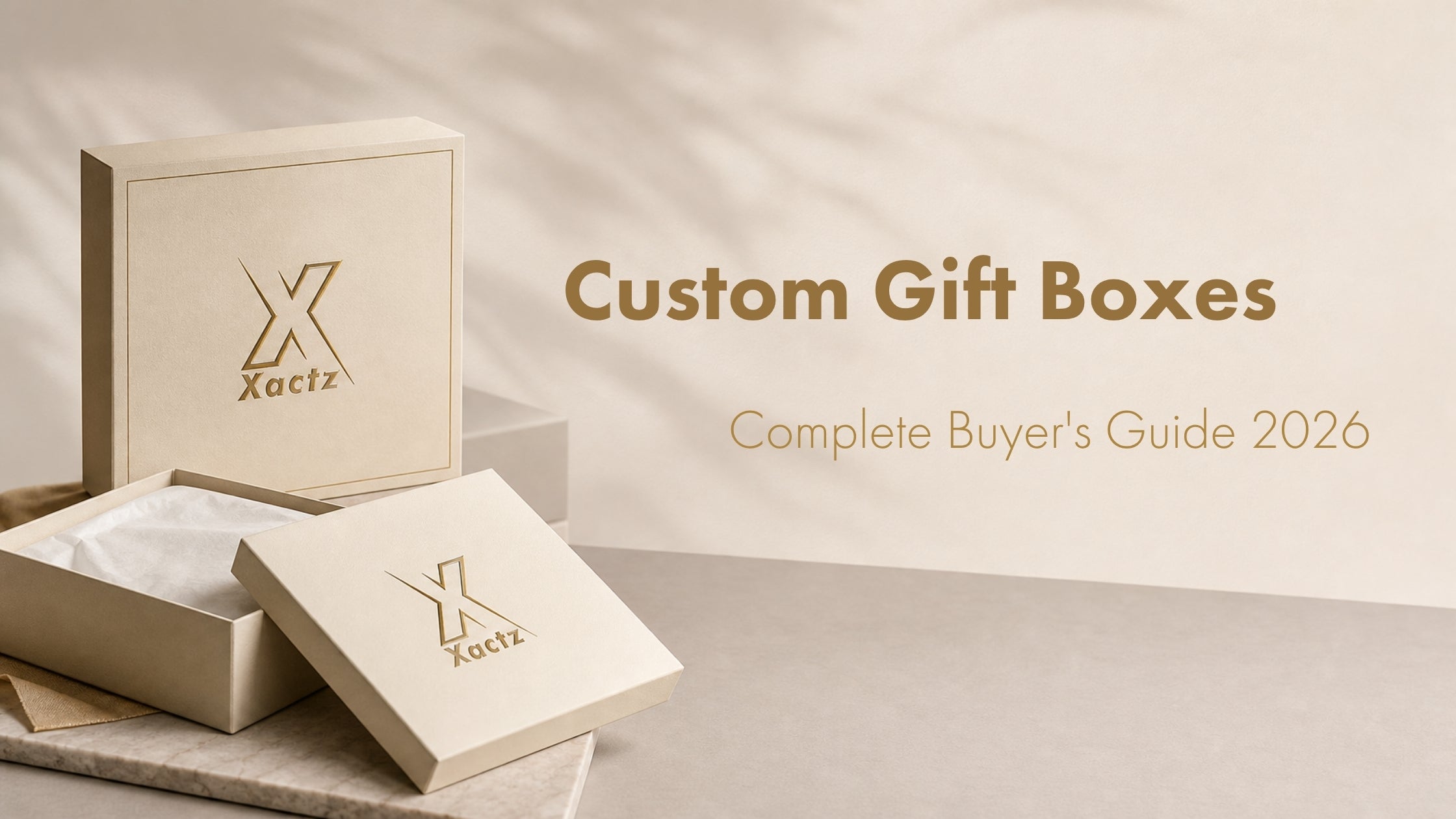
Custom gift packaging has moved well beyond its original function as a protective container. In 2026, the box is a primary brand touchpoint, a retention tool, and a social media asset all at once. For brands operating across retail, e-commerce, and corporate gifting, the packaging is no longer secondary to the product. It is part of the product experience itself.
The commercial case is clear. Gift packaging quality drives repeat purchases and word-of-mouth referrals, making the box a functional part of the gift rather than a wrapper around it. When a recipient asks where a gift came from before they have even seen what is inside, the packaging has already done its job. That referral loop is a measurable return on a packaging investment, and it compounds across every order a brand ships.
The market reflects this shift. Custom gift boxes are now a necessity across beauty, cosmetics, spirits, fashion accessories, technology, fine food, and corporate gifting. Brands that treat packaging as an afterthought are losing ground to competitors who understand that the unboxing moment is the most powerful physical touchpoint a brand has with its customer.
The Shift in Consumer Expectations
Three forces are reshaping what consumers expect from custom gift packaging in 2026.
The first is quiet luxury. The era of loud, graphic-heavy packaging is giving way to a new aesthetic language built on material quality, tactile finish, and structural restraint. Consumers in premium categories have learned to read minimalism as confidence. A rigid box with a single blind debossed logo on a soft-touch matte surface communicates more about brand quality than a box covered in competing graphic elements ever could.
The second is sustainability. Eco-conscious purchasing decisions are now mainstream across all age groups and income brackets. Consumers actively notice when packaging is wasteful, non-recyclable, or excessive. Brands that use FSC-certified boards, post-consumer recycled substrates, and molded pulp inserts are not just meeting regulatory requirements. They are meeting customer expectations that have become baseline in premium retail.
The third is the unboxing experience. Social media unboxing content generates billions of views annually and has made the physical reveal sequence a genuine brand marketing channel. The structural engineering of how a box opens, the layering of tissue paper, ribbon pulls, and inserts, and the sensory sequence from first touch to product reveal are now deliberate design decisions with measurable impact on customer retention and social sharing.
This guide covers every decision a brand or procurement buyer needs to make to source custom gift boxes that deliver on all three of these expectations, from structure selection and material specification through to finishes, inserts, cost optimization, and factory-direct sourcing.
Box Structures and Formats: Choosing the Right Style
Structure is the single most consequential decision in custom gift box sourcing. It sets the cost floor, defines the unboxing experience, and determines the shipping and storage profile of every unit you order. Pick the structure first. Everything else, material, finish, branding, is decoration applied on top of that structural foundation.
The main gift box structures available in 2026 fall into four categories, each serving a distinct price point, channel, and brand positioning.
Rigid Set-Up Boxes
Rigid set-up boxes are constructed from thick greyboard or chipboard, typically ranging from 1,200 gsm to 2,400 gsm, and are hand-assembled at the factory. They are non-collapsible, meaning they ship and store in their finished three-dimensional form. This is their primary logistical trade-off: they occupy significant volume in transit and in warehouse storage.
The two dominant rigid formats are the two-piece lid-and-base and the magnetic closure box.
The two-piece lid-and-base is the classic premium gift box structure. The lid lifts cleanly from the base, creating a simple, satisfying reveal that pairs naturally with ribbon, tissue paper, and custom inserts. It is the preferred structure for ready-to-gift sets, apparel, hampers, and any product where the reveal moment is the primary brand experience.
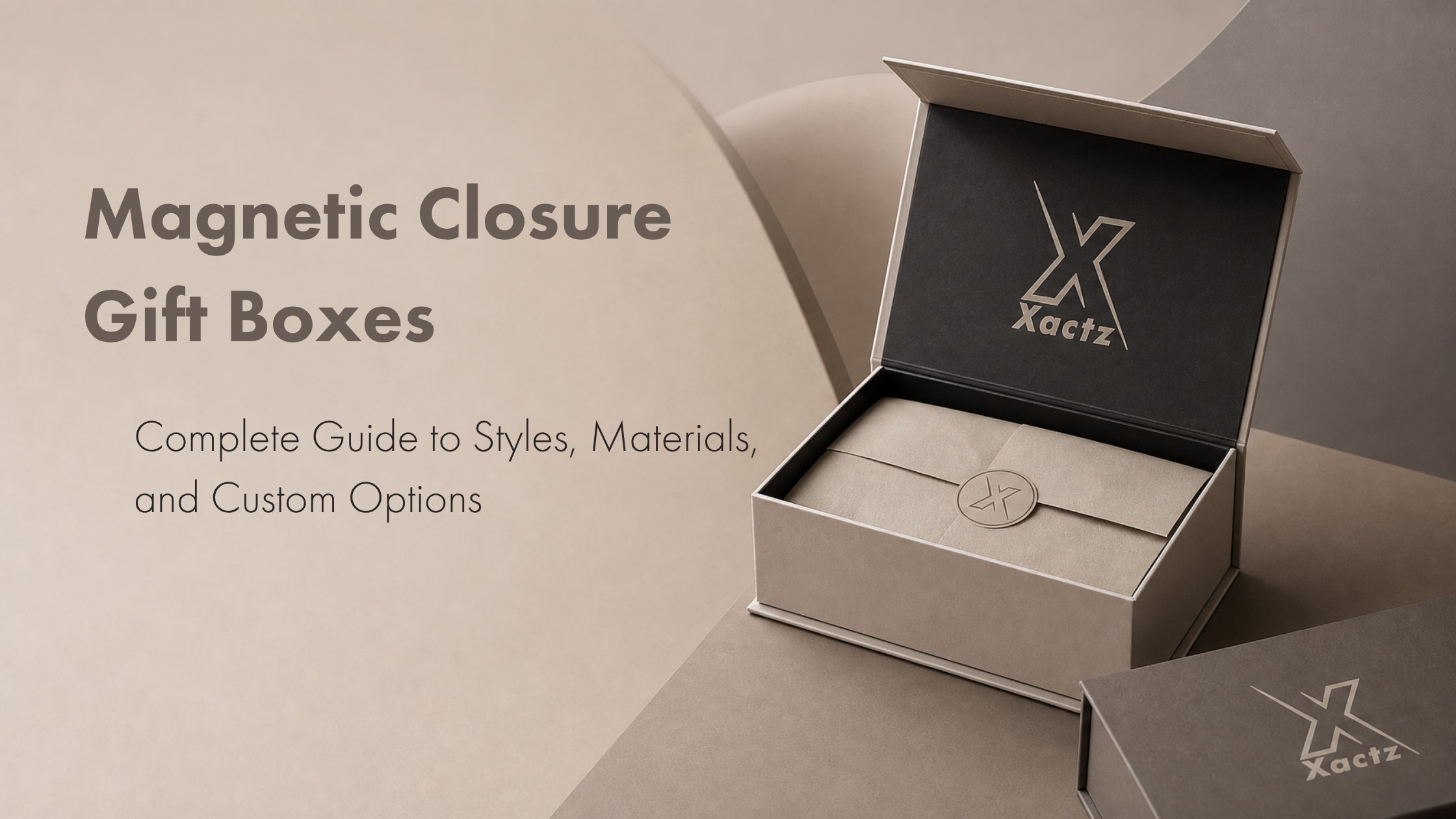
The magnetic closure box uses embedded neodymium magnets in the lid and base to create a clean, silent snap closure. It is the highest perceived-value structure in the custom gift box category and is the standard format across luxury cosmetics, premium spirits, fine jewelry, and high-end technology accessories. Magnetic closure boxes cost four to six times more than folding cartons and are best suited for products priced above fifty dollars, where the packaging investment is proportionate to the product value.
Both rigid formats are available with a full range of paper wraps, foil finishes, debossing, and custom interior configurations.
Collapsible and Flat-Pack Magnetic Boxes
Collapsible magnetic boxes deliver near-identical shelf presence and tactile quality to a fully rigid magnetic box, with one critical logistical advantage: they ship and store flat, reducing freight volume by up to sixty percent compared to their non-collapsible equivalents.
For direct-to-consumer e-commerce brands shipping premium products, the collapsible magnetic box is increasingly the preferred structure. It eliminates the dead air volume that makes rigid boxes expensive to ship, while maintaining the magnetic closure mechanism and premium paper wrap surface that define the luxury unboxing experience. At the one thousand unit tier, collapsible magnetic boxes typically cost between fifteen and twenty percent less per unit than fully rigid equivalents when total landed cost including freight is factored in.
The collapsible format is also significantly easier to store at the brand level, as flat-packed units stack efficiently in warehouse environments without the structural fragility risks associated with pre-assembled rigid boxes.
Drawer and Sliding Sleeve Boxes
Drawer boxes, also called sliding sleeve or matchbox-style boxes, consist of an outer sleeve and an inner tray that slides out horizontally. The slow, deliberate pull-out reveal creates one of the most tactile and theatrical unboxing experiences available in the custom gift box category.
This structure is particularly well suited to single high-value items where the reveal moment is the centrepiece of the gifting experience: watches, pens, premium skincare sets, jewelry, and high-end corporate gifts. The sliding mechanism naturally slows the recipient down, creating anticipation and extending the moment of discovery.
Drawer boxes are hand-assembled and carry a similar cost profile to magnetic rigid boxes. They require precise engineering of the sleeve-to-tray tolerance to ensure the drawer slides smoothly without being loose or binding. This tolerance specification is one of the most important quality control parameters to confirm with your manufacturer before approving a production run.
Folding Cartons and E-Commerce Mailers
Folding cartons are the workhorse of the custom gift box category. They are manufactured from lighter-weight paperboard, typically 300 gsm to 450 gsm, die-cut and scored flat, and erected at the point of use. They offer the lowest unit cost in the category, the most efficient shipping and storage profile, and a wide range of structural formats including straight tuck end, reverse tuck end, auto-bottom, and gable top.
For high-volume retail gifting, DTC subscription programs, and any application where unit economics are a primary constraint, a well-finished folding carton with custom inserts can achieve a comparable luxury impression to a rigid box at a fraction of the cost. The key is finish quality: a folding carton with water-based soft-touch coating, spot UV accents, and a precisely registered print achieves a premium shelf presence that generic cartons cannot match.
Corrugated mailer boxes are the standard format for e-commerce shipping applications where transit protection is the primary requirement. Single-wall and double-wall corrugated structures provide excellent crush resistance and can be fully custom printed on the exterior for brand consistency across the shipping experience.
Structure Comparison at a Glance
| Structure |
Best For |
Perceived Value |
Relative Cost |
Ships Flat |
| Magnetic rigid box |
Luxury retail, cosmetics, jewelry, tech |
Highest |
$$$ |
No |
| Two-piece lid and base |
Gift sets, apparel, hampers |
Very High |
$$$ |
No |
| Sliding drawer box |
Watches, pens, single premium items |
Very High |
$$$ |
No |
| Collapsible magnetic box |
D2C e-commerce premium |
High |
$$ |
Yes |
| Folding carton |
Retail gifting, subscriptions, high volume |
Medium-High |
$ |
Yes |
| Corrugated mailer |
E-commerce shipping, DTC |
Medium |
$ |
Yes |
Material Selection and Compliance Standards
Paperboard and Greyboard: Selecting the Right Caliper
The structural integrity of a custom gift box is determined by the caliper and density of its board substrate. For rigid boxes, greyboard is the primary structural material, with calipers typically ranging from 1.5 mm for lighter gift boxes to 3.0 mm for premium rigid structures requiring significant crush resistance.
Higher caliper greyboard delivers a heavier, more substantial feel in the hand, which directly correlates with perceived quality in consumer testing. The weight of a closed box before it is opened is one of the most powerful tactile signals of premium quality available to a packaging designer. Specifying the correct caliper for your product weight and structural requirements is a foundational decision that affects every downstream element of the packaging system.
For folding cartons, paperboard weight is specified in grams per square metre. Standard retail folding cartons use 300 gsm to 350 gsm board. Premium folding cartons for gifting applications typically use 400 gsm to 450 gsm, which provides the rigidity and hand-feel associated with higher-tier packaging without the cost and logistics profile of a fully rigid structure.
Sustainable Substrates: FSC, PCR, and Sugarcane Bagasse
Sustainable material selection is no longer optional for brands operating in premium retail. Consumer expectations, retailer sustainability requirements, and regulatory mandates are converging to make FSC-certified and recycled-content substrates the baseline specification for responsible packaging procurement.
FSC-certified boards carry chain-of-custody certification confirming that the virgin fibre content has been sourced from responsibly managed forests. FSC certification is the most widely recognised sustainability credential in the packaging industry and is increasingly required by major retailers as a condition of shelf placement. For brands selling into European, North American, and Australian premium retail channels, FSC certification on primary packaging materials is effectively a market access requirement.
Post-consumer recycled board incorporates fibre recovered from collected and processed waste paper streams. PCR board is available in recycled content percentages ranging from thirty percent to one hundred percent, with higher recycled content delivering stronger sustainability credentials at a modest premium over virgin-fibre equivalents. The visual character of PCR board varies with recycled content percentage: lower-content boards are visually indistinguishable from virgin stock, while higher-content boards may show natural variation in colour and surface texture that many premium brands now actively embrace as an authenticity signal.
Sugarcane bagasse is an agricultural byproduct fibre derived from the residue of sugarcane processing. It produces a naturally textured, warm-toned board with excellent printability and a compelling sustainability story: it diverts agricultural waste from incineration and requires no additional land use or deforestation. Bagasse board is particularly well suited to brands in food, wellness, and beauty categories where natural, artisanal aesthetics align with the product positioning.
Regulatory Compliance: EU PPWR, EPR, and Plastic Reduction
The regulatory landscape for packaging materials changed fundamentally on 12 August 2026, when the EU Packaging and Packaging Waste Regulation (PPWR) entered into force as directly applicable law across all EU member states. Any brand selling packaged goods into the EU market is now subject to PPWR requirements, regardless of where the packaging is manufactured.
PPWR establishes mandatory minimum recycled content thresholds for packaging materials, with escalating targets through 2030. It requires that all packaging placed on the EU market must be recyclable by 2030, with recyclability assessed against harmonised criteria rather than national standards. It also introduces eco-modulated EPR fees, meaning brands pay higher extended producer responsibility contributions for packaging that is harder to recycle, contains more virgin material, or uses non-compliant substances.
For custom gift box buyers, the practical implications of PPWR are significant. Plastic foam inserts, non-recyclable laminate films, and composite materials that cannot be separated for recycling are all subject to restriction or surcharge under the regulation. Water-based coatings, FSC-certified boards, PCR substrates, and molded pulp inserts are the material categories that align with PPWR compliance requirements and minimise EPR fee exposure.
Beyond the EU, Canada's EPR framework and equivalent regulations in the UK, Australia, and several US states are applying similar pressure on packaging material selection. Brands sourcing custom gift boxes for global distribution should treat PPWR-compliant material specifications as the global baseline rather than a regional requirement.
Interior Inserts: Elevating Protection and Unboxing
The interior of a custom gift box is where protection and presentation meet. A well-engineered insert system holds the product securely in transit, creates a precise and intentional reveal moment when the box is opened, and communicates the same level of craft and consideration as the exterior packaging. A poorly specified insert undermines every investment made in the exterior finish.
Thermoformed Molded Pulp
Molded pulp inserts are the premium sustainable alternative to plastic foam in custom gift box applications. They are manufactured by forming recycled paper fibre into precise three-dimensional shapes using heated moulds, producing inserts that are fully recyclable, compostable, and structurally capable of protecting fragile products through standard transit conditions.
Thermoformed molded pulp, the highest-precision category of molded pulp manufacturing, produces smooth-surfaced inserts with tight dimensional tolerances that are visually indistinguishable from thermoformed plastic in many applications. The smooth surface accepts printing and can be produced in a range of natural tones from warm cream to deep grey, making it compatible with premium aesthetic requirements across beauty, cosmetics, spirits, and technology categories.
For brands transitioning away from plastic foam under PPWR mandates or voluntary sustainability commitments, thermoformed molded pulp is the specification-grade replacement. It delivers equivalent product protection, superior sustainability credentials, and a tactile quality that many consumers now actively prefer to plastic foam.
Custom Corrugated and Cardboard Dividers
Corrugated and solid cardboard dividers are the most cost-effective insert solution for multi-item gift sets and subscription box applications. They are manufactured from the same recyclable fibre streams as the outer box, making them fully compatible with single-stream recycling and PPWR recyclability requirements.
Custom divider systems can be engineered to precise compartment dimensions for specific product configurations, providing secure product positioning without adhesive or additional packaging materials. For brands shipping multi-item sets, a well-designed divider system eliminates product movement in transit, reduces damage claims, and creates a clean, organised reveal when the box is opened.
Dividers can be left as natural kraft board for an honest, craft aesthetic, or wrapped in printed paper for full brand consistency with the exterior packaging system.
Fabric and Velvet Wraps over Paperboard Cores
For the highest tier of luxury gift box applications, fabric and velvet wraps applied over rigid paperboard cores deliver a handfeel and visual quality that no paper-based insert can replicate. A velvet-wrapped tray in a deep jewel tone or neutral off-white creates an immediate signal of exceptional quality that positions the product as a genuine luxury item before it is even touched.
The key specification consideration for fabric-wrapped inserts is the paperboard core beneath the fabric. Using a recyclable paperboard core rather than a plastic foam substrate maintains the recyclability of the insert system and aligns with PPWR compliance requirements, while delivering the same luxury handfeel at the surface level.
Fabric-wrapped inserts are most appropriate for jewelry, watches, premium cosmetics, and corporate gifting applications where the insert is expected to be retained and reused by the recipient rather than discarded.
Surface Finishes, Printing and Branding Techniques
The surface finish of a custom gift box is the most immediate and powerful communicator of brand positioning. Before a consumer reads a word of copy or registers a logo, they have already formed a quality judgment based on what the box feels like in their hand. Finish selection is not a cosmetic decision. It is a brand strategy decision.
Water-Based Soft-Touch Coatings vs Lamination
Soft-touch matte finish is the defining surface quality of premium custom gift packaging in 2026. The velvety, low-friction surface created by a soft-touch coating produces an immediate tactile signal of quality that consumers associate with the highest tier of luxury goods. It photographs exceptionally well, reducing glare and producing the clean, shadow-free surface that performs best in product photography and unboxing content.
The critical distinction for compliance-conscious buyers is between soft-touch lamination and water-based soft-touch coating. Traditional soft-touch lamination applies a plastic film to the board surface, which compromises the recyclability of the substrate and creates EPR fee exposure under PPWR. Water-based soft-touch coatings applied inline during the printing process deliver a comparable tactile experience without any plastic film layer, maintaining the full recyclability of the board substrate and PPWR compliance.
For brands operating under sustainability commitments or selling into EU markets, water-based soft-touch coating is the specification-grade choice. It delivers the premium matte surface quality the market expects while maintaining the material integrity required for regulatory compliance.
Blind Debossing and Embossing
Blind debossing, the process of pressing a design element into the paper surface without ink or foil, is the signature branding technique of quiet luxury packaging. On a soft-touch matte surface, a blind debossed logo catches light at an angle, revealing itself gradually as the box is turned in the hand. The effect is intimate, considered, and tactile in a way that printed branding cannot replicate.
The perceived value impact of blind debossing is disproportionate to its production cost. A rigid box with a single blind debossed logo reads as significantly more premium than the same box with a printed logo, even when every other element is identical. The reason is tactile engagement: the debossed impression invites the fingertips in a way that print never can, and tactile engagement is one of the most powerful drivers of perceived quality in physical product categories.
Embossing, the raised counterpart to debossing, offers a more assertive visual presence. For brands that want their mark to be seen as well as felt, a combination of embossed logo with blind debossed background texture creates a layered surface that rewards close inspection and communicates exceptional craft.
Hot Foil Stamping and Spot UV
Hot foil stamping applies a metallic or pigmented foil to the box surface using heat and pressure, creating a precise, high-definition accent that catches light and communicates luxury. Warm gold foil is the most widely used accent in premium gift box applications in 2026, providing a refined contrast against soft-touch matte surfaces in Cloud Dancer off-white, warm earth tones, and deep neutral palettes without overwhelming the minimalist aesthetic.
Rose gold foil has become a signature finish in beauty and wellness packaging, while silver foil remains the preferred choice for technology and corporate gifting applications. Holographic foil is used selectively for limited edition and seasonal gifting applications where visual drama is the primary objective.
Spot UV applies a clear, high-gloss varnish to selected areas of a matte surface, creating a contrast between the velvety matte ground and the glossy accent that is both visually striking and tactilely engaging. Spot UV is most effective when used to highlight a logo, a pattern element, or a typographic detail against a soft-touch matte background, where the contrast between the two surface qualities creates maximum visual and tactile impact.
Cost Optimization, MOQs and Manufacturing Specs
Understanding MOQs: Balancing Volume with Unit Pricing
Minimum order quantities in custom gift box manufacturing are driven by tooling costs, material break quantities, and machine setup economics rather than by manufacturer preference. Understanding the honest MOQ structure for each box format allows buyers to plan orders that balance unit pricing against cash flow and storage requirements.
For rigid formats including magnetic closure boxes, two-piece lid-and-base, and drawer boxes, honest minimums from factories running boutique production batches start at one hundred pieces. At this volume, unit pricing for a magnetic rigid box at a reference size of 200 x 200 x 80 mm with a printed art-paper wrap and no finishes runs approximately three dollars and ten cents ex-works. At five hundred pieces, the same box runs approximately two dollars and sixty cents. At five thousand pieces, approximately one dollar and eighty-five cents.
For folding cartons and corrugated mailers, minimums typically start at three hundred to five hundred pieces, with unit pricing for a standard corrugated mailer at the same reference size running approximately eighty-five cents at five hundred pieces and forty-five cents at five thousand pieces.
Finishes add to the base unit cost. Soft-touch coating, foil stamping, debossing, and specialty paper wraps each add between twenty and fifty-five cents per unit at entry volumes, with the per-unit premium decreasing significantly at higher order quantities.
The single most important cost lever in custom gift box sourcing is structure selection, not decoration. A magnetic rigid box with no finishes costs more than a folding carton with full foil and soft-touch coating. Buyers who optimise structure first and then layer finishes within their budget consistently achieve better value outcomes than buyers who start with a finish specification and work backward.
Be aware that boxes quoted through online design platforms or trading companies typically carry a thirty to fifty percent markup over factory-direct pricing. If a supplier only shows rendered photographs and will not conduct a video call from the production floor, you are likely paying that markup.
Dielines, Sample Approvals, and Structural Testing
No custom gift box order should proceed to full production without a confirmed physical sample approval. The sample approval process serves three critical functions: fitment verification, structural integrity testing, and colour and finish proofing.
Fitment verification confirms that the product sits correctly within the box and insert system, with appropriate clearances for closure and transit movement. A box that is too tight will damage the product during insertion. A box with excessive clearance will allow product movement in transit, creating noise, potential damage, and a poor unboxing experience.
Structural integrity testing confirms that the box maintains its form through standard transit conditions. For rigid boxes, this includes drop testing from standard carrier heights and compression testing under stacked pallet loads. For folding cartons, it includes erection testing to confirm that the box assembles cleanly and holds its shape under product load.
Colour and finish proofing confirms that the printed colours match the approved brand specifications under standard retail lighting conditions, and that the surface finish, whether soft-touch, foil, or debossing, meets the quality standard agreed at the quotation stage.
Dieline accuracy is the foundation of the sample approval process. A precise dieline, provided by the manufacturer and confirmed against the physical sample, ensures that every subsequent production run replicates the approved specification exactly.
Shipping and DIM Weight Efficiency
Dimensional weight pricing by major carriers means that the physical volume of a shipment is as important as its actual weight in determining freight cost. Custom box dimensions that are even marginally larger than the product they contain generate unnecessary DIM weight charges that compound across every unit shipped.
Designing custom box dimensions to eliminate empty space is one of the highest-return optimisation decisions available to e-commerce brands. A box engineered to the minimum viable dimensions for its product, with inserts that hold the product precisely in position, reduces DIM weight charges, reduces void fill requirements, and reduces the total material cost per unit.
Collapsible and flat-pack box formats provide a further freight efficiency advantage by shipping to the brand in flat-packed form, eliminating the dead air volume of pre-assembled rigid boxes in inbound freight. For brands importing large volumes of custom gift boxes, the freight saving on flat-packed formats versus pre-assembled rigid boxes can represent a significant reduction in total landed cost per unit.
Sourcing Factory-Direct Packaging from Xactz
Sourcing custom gift boxes factory-direct eliminates the thirty to fifty percent reseller markup that brands pay when ordering through trading companies, online platforms, or intermediary agents. It also gives you direct access to the production team making decisions about your materials, finishes, and quality standards, rather than communicating through a layer of intermediaries who may not accurately convey your specifications.
At Xactz, we manufacture custom gift boxes across the full range of structures, from magnetic rigid boxes and two-piece lid-and-base formats to collapsible flat-pack magnetic boxes, drawer boxes, folding cartons, and corrugated mailers. We work with FSC-certified boards, PCR substrates, sugarcane bagasse, and thermoformed molded pulp inserts. Our finishing capabilities include water-based soft-touch coatings, hot foil stamping in gold, silver, rose gold, and holographic, blind debossing and embossing, and spot UV.
Before you contact us for a quote, have the following specifications ready. The more precisely you can define your requirements, the faster and more accurately we can quote.
Your Pre-Quote Specification Checklist
- Box dimensions: internal length, width, and depth in millimetres
- Box structure: magnetic rigid, two-piece lid and base, drawer box, collapsible magnetic, folding carton, or corrugated mailer
- Material preference: standard greyboard, FSC-certified board, PCR content percentage, or sugarcane bagasse
- Surface finish: water-based soft-touch coating, specialty paper wrap, or standard lamination
- Branding techniques: blind debossing, embossing, hot foil stamping (colour), spot UV, or print only
- Insert requirements: thermoformed molded pulp, cardboard dividers, fabric or velvet wrap, or none
- Order quantity: units per initial order and estimated annual volume
- Compliance requirements: EU PPWR, FSC chain of custody, recycled content percentage targets
- Target delivery timeline and destination port
Know your specifications. Know your aesthetic. Get your factory-direct quote.
Visit www.xactz.com to explore our full range of custom gift box solutions and contact our team directly for a quote tailored to your brand specifications, volume requirements, and compliance targets.