Use less text on mobile!
EXACTLY WHAT YOU NEED
EVERYTHING CUSTOMIZABLE
Use less text on mobile!
FEEL THE LUXURY
CONTACT US TO GET A QUOTE AS YOU NEED
EXACTLY WHAT YOU NEED
EVERYTHING CUSTOMIZABLE
CONTACT US & GET YOUR QUOTE
FEEL THE LUXURY
By Xactz Packaging
Apr 24, 2026
Add a comment
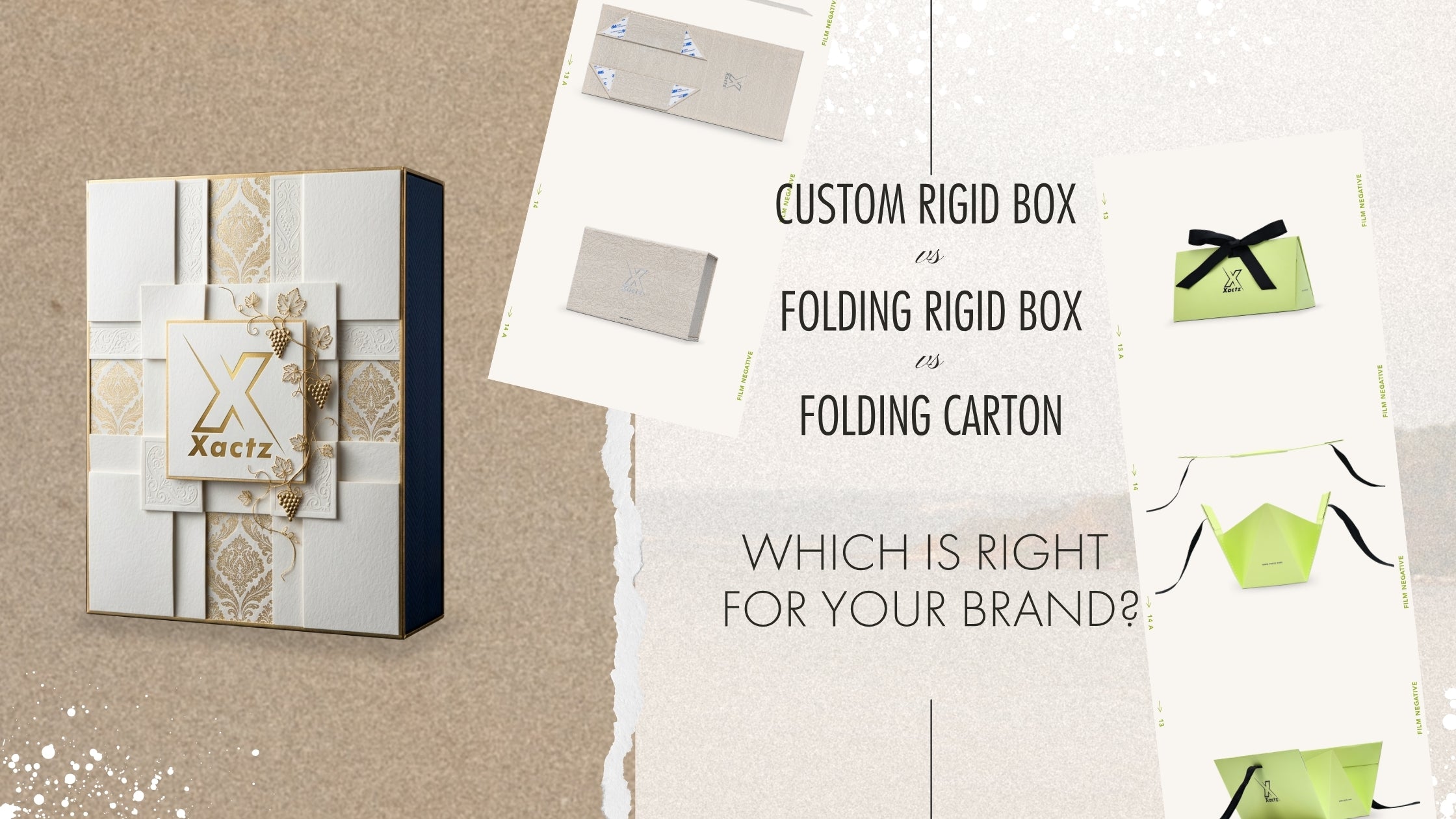
When it comes to custom packaging, one of the most important decisions your brand will make is choosing the right box format. Rigid boxes, folding rigid boxes and folding cartons are the three primary formats used across luxury retail, e-commerce and consumer goods, but they serve very different purposes, deliver very different brand experiences, and come at very different price points.
This guide breaks down everything you need to know about all three formats, construction, cost, finishing, use cases and how to decide which is right for your brand.

A rigid box, also known as a set-up box, is a non-collapsible packaging structure made from thick, dense greyboard or chipboard, typically wrapped in specialty paper, fabric or leather-effect material. Rigid boxes are assembled at the factory and shipped in their finished form, they do not fold flat.
Rigid boxes are the packaging of choice for luxury brands. Think of the box your smartphone came in, the packaging around a high-end perfume, or the gift box from a premium jewellery brand. That structured, weighty, premium feel is the hallmark of a rigid box.
Common rigid box styles include:

A folding rigid box, also known as a collapsible rigid box, is a hybrid format that delivers the premium look, feel and structural integrity of a traditional rigid box, but with one critical operational advantage: it folds flat for shipping and storage.
Folding rigid boxes are constructed from the same thick greyboard used in traditional rigid boxes, but are engineered with foldable flaps and precision adhesive corners that allow the box to collapse flat and then snap back into its full rigid form when assembled. Once assembled, a folding rigid box is visually and tactilely indistinguishable from a traditional rigid box - same sharp corners, same firm structure, same premium exterior finish.
This makes the folding rigid box one of the most commercially intelligent packaging formats available. Brands get the luxury presentation of a rigid box at significantly reduced freight and storage costs, a genuine best-of-both-worlds solution.
Common folding rigid box styles include:
The folding rigid box is particularly well suited to:

A folding carton is a packaging structure made from paperboard or corrugated board that is die-cut, scored and shipped flat, then assembled by the brand or fulfilment centre before use. Folding cartons are the most widely used form of packaging in consumer goods, from cosmetic packaging to mailer boxes and retail shelf cartons.
Folding cartons are highly versatile, cost-effective and capable of delivering a premium look when paired with the right finishes and materials. They are the backbone of e-commerce packaging and mid-to-premium retail packaging worldwide.
Common folding carton styles include:
Rigid boxes are built from thick greyboard, typically 2mm to 3mm board, wrapped in printed or specialty paper, assembled permanently at the factory. They ship in their finished form and cannot be collapsed.
Folding rigid boxes use the same thick greyboard construction but are engineered with collapsible joints that allow the box to fold flat. Once assembled by the recipient, they are structurally identical to a traditional rigid box, firm, sharp-cornered and premium in feel.
Folding cartons are made from lighter paperboard, typically 300gsm to 450gsm, die-cut and scored so they fold flat for shipping and storage. They are assembled when needed and are significantly lighter than either rigid format.
Rigid boxes offer the highest level of structural protection, thick board, permanent construction, resistant to crushing and compression. Ideal for fragile, high-value or heavy products.
Folding rigid boxes offer equivalent structural protection to traditional rigid boxes once assembled. The collapsible joint engineering does not compromise the integrity of the assembled box, it performs identically to a set-up rigid box in terms of product protection.
Folding rigid boxes offer equivalent structural protection to traditional rigid boxes once assembled. The collapsible joint engineering does not compromise the integrity of the assembled box, it performs identically to a set-up rigid box in terms of product protection.
Folding cartons are the most cost-effective format, lighter materials, flat-pack shipping and fast assembly keep both production and logistics costs low.
Folding rigid boxes sit in the middle of the cost spectrum. They cost more to produce than folding cartons due to their thicker board and more complex engineering, but they cost significantly less to ship than traditional rigid boxes because they travel flat. For brands sourcing from overseas manufacturers, the freight saving on folding rigid boxes versus traditional rigid boxes can be substantial.
Traditional rigid boxes are the most expensive format per unit. Thicker materials, factory assembly, and the inability to ship flat all contribute to a higher landed cost, typically two to four times the cost of a comparable folding carton.
The decision comes down to brand positioning and logistics reality. If your product retails at a premium price point and your freight costs are manageable, a traditional rigid box delivers the ultimate brand experience. If you want luxury presentation with smarter logistics economics, a folding rigid box is the intelligent choice. If your product is mid-market or high-volume, a well-finished folding carton delivers strong brand impact at the lowest cost.
All three formats support the full range of premium finishing options, foil stamping, embossing, debossing, spot UV, soft-touch lamination, holographic effects and custom textures. The finishing possibilities are not limited by the box format, they are limited only by the manufacturer's capabilities.
Rigid boxes and folding rigid boxes share one finishing advantage that folding cartons cannot match, the ability to wrap the exterior in specialty materials such as linen, velvet, leather-effect paper, handmade paper or custom fabric. This tactile exterior finish is unique to rigid box construction and is a significant part of what makes luxury packaging feel genuinely luxurious.
Folding cartons achieve their premium finish through print quality, lamination and surface treatments, all of which can be executed to an exceptional standard with the right manufacturer.
Traditional rigid boxes create the most deliberate and considered unboxing moment. The weight, the resistance of a magnetic closure, the slow reveal, every element signals premium quality. For luxury brands, this moment is part of the product experience itself.
Folding rigid boxes deliver an identical unboxing experience to traditional rigid boxes once assembled. The customer receives the same premium moment, the same firm structure, the same magnetic snap, the same reveal, with no visible difference from a set-up rigid box. The operational advantages of the folding format are entirely invisible to the end customer.
Folding cartons achieve their premium finish through print quality, lamination and surface treatments, all of which can be executed to an exceptional standard with the right manufacturer.
This is where the three formats diverge most clearly in operational terms.
Traditional rigid boxes ship assembled, they take up the most warehouse space and cost the most to freight from manufacturer to brand. For brands ordering from China, this is a significant cost consideration.
Folding rigid boxes ship flat, dramatically reducing both freight volume and storage requirements compared to traditional rigid boxes. This is the format's defining commercial advantage. Brands get rigid box presentation at folding carton logistics economics.
Folding cartons are the most efficient format for storage and shipping. They ship flat, store flat and assemble in seconds, making them the natural choice for high-volume e-commerce operations.
All three formats can be produced using FSC-certified materials and environmentally responsible processes. The sustainability profile of your packaging depends less on the format and more on the manufacturer you choose and the materials they source.
Folding cartons use the least material per unit and generate the lowest shipping emissions due to flat-pack efficiency. Folding rigid boxes improve on the sustainability profile of traditional rigid boxes by reducing freight volume and therefore shipping emissions, while maintaining the reusability advantage that rigid box formats are known for. Traditional rigid boxes use the most material and generate the highest freight emissions, but their perceived reusability means customers often keep them long after the product is gone.
Regardless of which format you choose, a custom insert transforms the interior presentation of your packaging. Inserts can be produced in foam, pulp, card, fabric or paper, and they serve two purposes: protecting your product during transit and elevating the reveal moment when the customer opens the box.
For rigid boxes and folding rigid boxes, a custom insert is almost always recommended, it completes the luxury experience and ensures your product sits perfectly inside the box. For folding cartons, an insert is optional but adds significant perceived value, particularly for gifting or premium retail.
Whether your brand needs a traditional rigid box, a folding rigid box, a folding carton or a combination of all three, Xactz has the capability, materials and expertise to deliver exactly what your brand requires.
Two fully automated manufacturing facilities spanning 40,000 sqm. 20+ specialty finishing options. Extensive inventory of standard and specialty papers, boards and wrapping materials. Flexible order quantities from pilot run to full-scale production. ISO 9001 certified, FSC certified, TÜV Rheinland verified.
Xactz has been the trusted custom packaging manufacturer for brands in 60+ countries since 2006. Tell us what your brand needs, and we will build it.
Ready to get started? Contact the Xactz team today and request your sample pack.
By Xactz Packaging
Aug 16, 2026
By Xactz Packaging
Aug 13, 2026
By Xactz Packaging
Aug 12, 2026
