Use less text on mobile!
EXACTLY WHAT YOU NEED
EVERYTHING CUSTOMIZABLE
Use less text on mobile!
FEEL THE LUXURY
CONTACT US TO GET A QUOTE AS YOU NEED
EXACTLY WHAT YOU NEED
EVERYTHING CUSTOMIZABLE
CONTACT US & GET YOUR QUOTE
FEEL THE LUXURY
By Xactz Packaging
May 4, 2026
Add a comment
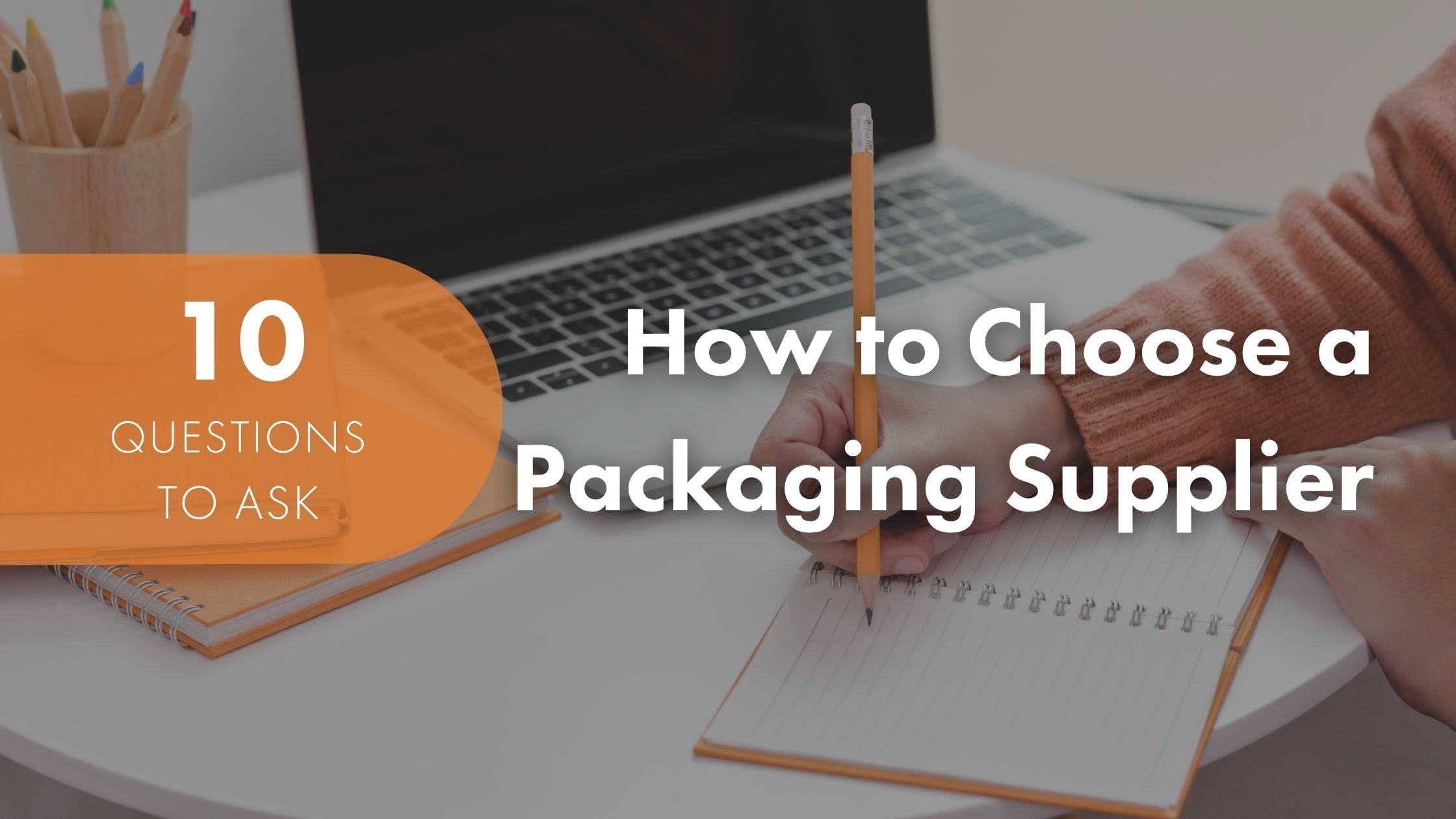
Choosing a packaging supplier is one of the most consequential decisions a brand makes. Get it right and you have a manufacturing partner that protects your quality, meets your deadlines, and scales with your growth. Get it wrong and you are dealing with missed timelines, inconsistent quality, and a supplier that cannot answer a direct question about their own production process.
Most brands learn this the hard way, after a failed first order, a delayed launch, or a production run that arrived nothing like the approved sample.
This guide gives you the ten questions that separate a genuine manufacturing partner from everyone else. Ask every one of them before you commit to a single order.
This is the first question. Ask it before anything else.
A trading company does not own a factory. They source your order from one or more manufacturers, add their margin, and manage the communication in between. You pay more. You get less visibility. And when something goes wrong, and eventually something always does, accountability disappears into the gap between the trading company and the actual production floor.
A direct manufacturer owns the facility, the machinery, and the team. Every technical question goes directly to the people producing your packaging. Every quality issue is resolved on the production floor, not passed back and forth through a middleman.
What a good answer looks like: Immediate confirmation that they are a manufacturer, followed by an offer to show you their facility in person or via verified documentation and video.
What a red flag looks like: Hesitation. Vague language about "our factory partners." An inability to show you their own certified facilities.
Certifications are independently verified proof of a manufacturer's quality standards, sustainability practices, and operational integrity. They cannot be faked, they can only be earned, audited, and maintained.
The three certifications every serious packaging supplier should hold are:
What a good answer looks like: Certificate numbers, issuing bodies, and expiry dates provided immediately, with an offer to send copies for independent verification.
What a red flag looks like: Generic claims of being "ISO certified" with no certificate number. FSC logos used in marketing materials with no verifiable certificate. Inability to name the certifying body.
Scale, automation, and infrastructure tell you everything about a manufacturer's capacity to deliver, consistently, at volume, and on time.
Ask specifically:
A manufacturer operating fully automated production lines across purpose-built facilities is a fundamentally different proposition from one running manual lines in a general-purpose factory. Automation eliminates the human variability that causes inconsistency, rework, and delays. Scale ensures your order does not compete for machine time with every other client on the floor.
What a good answer looks like: Specific facility dimensions, named machinery, confirmation of automation across key production stages, and evidence of dedicated luxury packaging infrastructure.
What a red flag looks like: Vague descriptions. No specific facility size. Inability to describe the machinery used in production.
Lead time is one of the most misrepresented metrics in packaging sourcing. Suppliers quote timelines that sound competitive but exclude sample production, procurement delays, and finishing stages, leaving brands with a delivery date that bears no resemblance to reality.
Ask for the timeline from sample approval to dispatch, not from order placement, not from design sign-off, not from payment receipt. Sample approval is the only meaningful starting point, because it is the moment all variables are locked and production can begin without interruption.
Also ask:
What a good answer looks like: A specific, consistent timeline from sample approval — with confirmation that all finishing is in-house and that rush order options exist for exceptional deadlines.
What a red flag looks like: Timelines quoted from order placement. Finishing outsourced to third parties. No clarity on what the timeline actually includes.
Finishing is where luxury packaging is made or broken. Hot foil stamping, embossing, debossing, spot UV, soft-touch lamination, holographic effects, flocking, satin linings, these are the details that elevate a box from functional to extraordinary.
But finishing is also where timelines collapse at manufacturers who outsource it. Every time a production run leaves the facility for finishing and returns, you introduce a new timeline variable, a new quality handoff, and a new point of failure.
Ask your supplier:
What a good answer looks like: 20+ finishing options confirmed as fully in-house, with physical samples or verified production photography available on request.
What a red flag looks like: A long list of finishing options with no confirmation that they are in-house. Samples that look like renders. Inability to show finishing machinery.
Minimum order quantities (MOQs) determine whether a supplier can actually work with your brand at its current stage, and whether they can scale with you as you grow.
A supplier with a 5,000-unit MOQ is not a viable partner for a brand launching its first collection. A supplier who cannot handle 50,000 units without quality degradation is not a viable partner for a brand scaling globally.
Ask for MOQ at both ends:
What a good answer looks like: A low minimum order quantity, ideally 100 -1000 units, with confirmed capacity to scale to 100,000+ units without compromising quality or timeline.
What a red flag looks like: High MOQs with no flexibility. Vague answers about maximum capacity. No confirmation that quality is maintained at volume.
Quality control is the difference between a production run that matches your approved sample and one that does not. Every manufacturer claims to have quality control. Very few can describe exactly what it involves.
Ask specifically:
The answer to the last question is particularly revealing. A manufacturer confident in their quality will have no hesitation in allowing independent inspection. One that resists it is telling you something important.
What a good answer looks like: A structured, multi-stage QC process operating within an ISO 9001:2015 certified quality management framework with full documentation and third-party inspection rights confirmed.
What a red flag looks like: Vague references to "our quality team." No mention of ISO certification. Resistance to third-party inspection.
Export experience and operational heritage are proxies for capability, compliance knowledge, and reliability. A manufacturer shipping to 60+ countries has navigated the customs requirements, logistics challenges, and international quality standards of dozens of different markets. A manufacturer that has been operating for 20+ years has built the supplier relationships, process refinements, and institutional knowledge that simply cannot be replicated quickly.
Ask:
What a good answer looks like: 30 to 60+ countries, 15 to 20+ years of operation, and evidence of long-term client relationships across multiple industries and geographies.
What a red flag looks like: Limited export markets. A company founded recently with no verifiable track record. Inability to name industries or regions they serve.
Your packaging designs, structural dielines, and brand assets are proprietary. Before you share them with any manufacturer, confirm in writing that they remain exclusively yours, and that the manufacturer will not use them for any other client or purpose.
Ask:
A manufacturer with their own registered IP understands the value of intellectual property and is far more likely to respect yours.
What a good answer looks like: NDA available before any design files are shared. Confirmation that all dielines and designs developed for your brand remain your property. Evidence of the manufacturer's own registered IP portfolio.
What a red flag looks like: Resistance to signing an NDA. Ambiguity about who owns the dielines. No registered IP of their own.
Any manufacturer can claim to serve leading brands. Very few can prove it in a way that is independently verifiable. Ask for evidence, not testimonials on their own website, but independently verifiable proof of the clients, industries, and geographies they serve.
Ask:
What a good answer looks like: TÜV Rheinland Verified Supplier status, independently audited Alibaba Gold Supplier profile, and verifiable evidence of clients across multiple industries and countries.
What a red flag looks like: Testimonials only on their own website. No third-party verification. Inability to provide any independently verifiable client evidence.
Xactz is China's No.1 luxury custom packaging manufacturer, and every question in this guide has a direct, verified answer.
Xactz owns and operates two fully automated manufacturing facilities spanning over 40,000 square metres across Shenzhen and Huizhou, China. There are no trading company layers, no outsourced production floors, and no middlemen between your brief and the team producing your packaging.
All three certifications are independently verified, current, and available on request.
Two purpose-built luxury packaging production facilities in Shenzhen and Huizhou, fully automated across every production stage, with parallel production line capacity that ensures your order is never delayed by another client's run.
Xactz produces full custom orders in 10 to 18 business days from sample approval, with all finishing executed in-house and rush order production available on request for exceptional deadlines.
Hot foil stamping, cold foil, embossing, debossing, spot UV, holographic effects, soft-touch lamination, flocking, satin linings, and custom textures, all executed on-site by Xactz finishing specialists.
Xactz supports order quantities from 100 to 1,000,000+ units, scalable from a brand's first order to a global packaging programme, with no compromise on quality or timeline at any volume.
Every production batch is inspected against the approved sample within the Xactz ISO 9001:2015 quality management framework. Third-party inspection is available and welcomed.
Since 2006, Xactz has been producing luxury custom packaging for brands across beauty, jewellery, fashion, electronics, food and beverage, and wellness, shipping to 60+ countries worldwide.
Xactz holds multiple CNIPA-registered patents and design registrations, including the Portable Foldable Carton Box, Suspended Float Storage Box, and House-Shape Foldable Gift Box. Your designs and dielines remain exclusively yours.
Xactz's TÜV Rheinland Verified Supplier status is the independent, on-site confirmation that every claim in this guide has been assessed and verified by one of the world's most respected certification bodies.
| Question | What You Are Evaluating |
|---|---|
| Are you a manufacturer or trading company? | Direct accountability and pricing |
| Can you show me your certifications? | Quality, sustainability, and operational integrity |
| What are your production facilities like? | Scale, automation, and infrastructure |
| What is your timeline from sample approval? | Realistic lead time with all stages included |
| What finishing options do you offer — in-house? | Capability and timeline reliability |
| What are your MOQs? | Fit for your current volume and future scale |
| How do you handle quality control? | Process rigour and third-party inspection rights |
| How many countries do you export to? | Export experience and compliance knowledge |
| What IP protections do you offer? | Protection of your designs and brand assets |
| Can you provide verified client evidence? | Independent proof of capability and track record |
You now have the complete framework. Ten questions. Every answer verified.
Xactz is ready to answer all of them, directly, in full, with independently verified documentation available on request.
Contact Xactz now to discuss your requirements, request a sample, or receive a custom quote. Visit www.xactz.com or reach out directly through the contact page to speak with the Xactz team.
By Xactz Packaging
Jun 15, 2026
By Xactz Packaging
Jun 11, 2026
By Xactz Packaging
Jun 9, 2026

